Molokhia is a beloved Middle Eastern dish, and what makes it so special is that every country and even every household prepares it a little differently. Some versions are finely crushed and served almost like a soup, while others are smoother or thicker depending on tradition.
In Lebanon, we make molokhia using the whole leaves, not crushed, and that’s honestly my favorite way. The leaves stay tender, the flavor is richer, and the texture is just perfect. It’s cooked slowly in a fragrant, flavorful chicken broth, making it a true comfort dish that brings back so many memories of home.
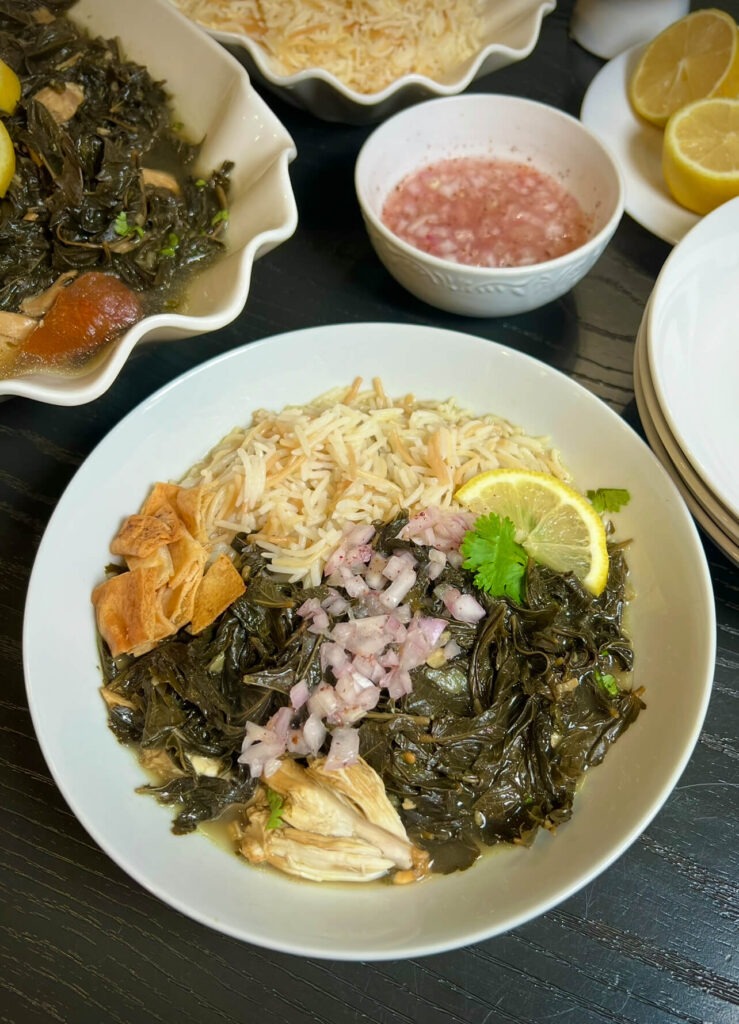
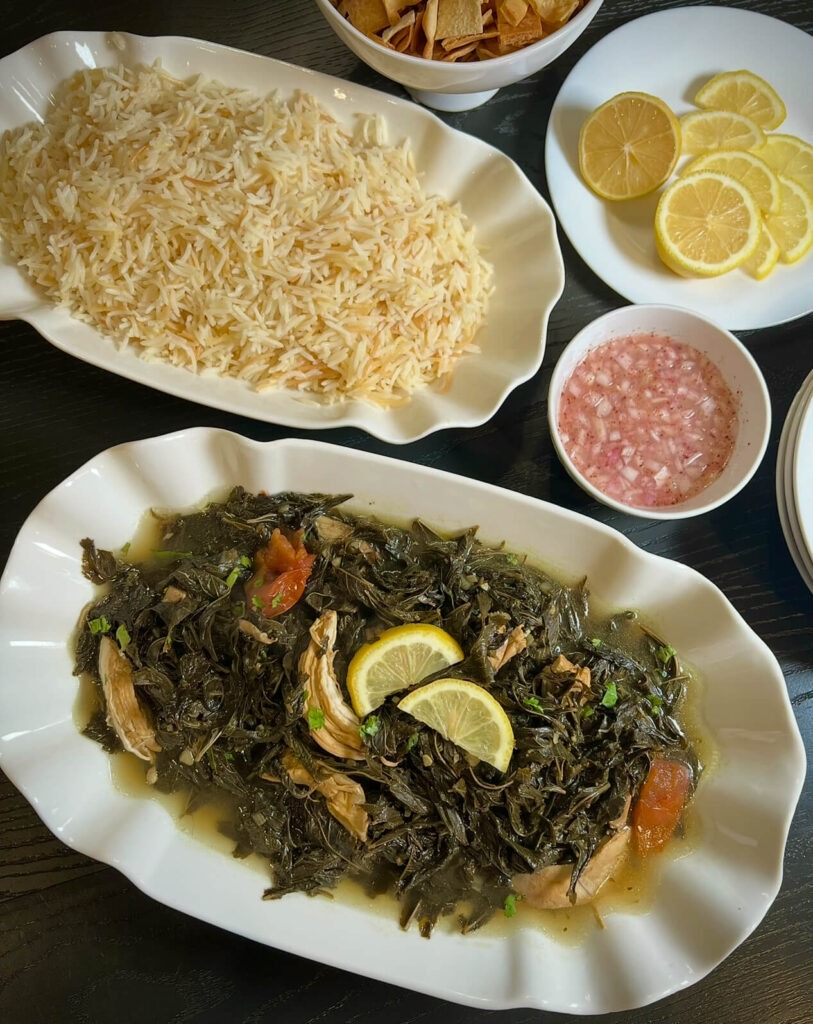
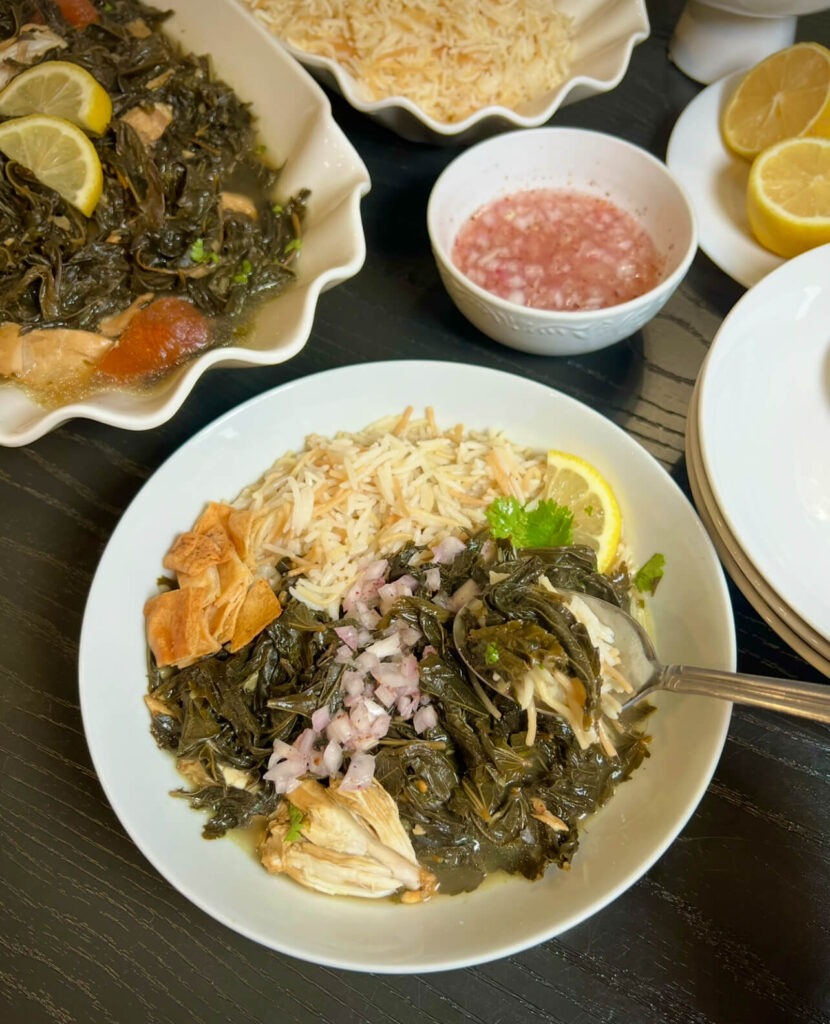
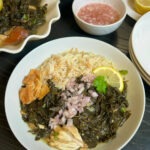
Lebanese molokhia is all about balance—garlicky, herby, and beautifully savory, with just the right amount of lemon at the end. We love serving it with vermicelli rice, crunchy pita bread, and a generous squeeze of fresh lemon. Some people enjoy it extra lemony, while others make a simple topping of chopped onions with lemon juice, or a mix of lemon juice, vinegar, and onion, spooned over the molokhia right before eating. That tangy bite takes it to the next level.
This is the Lebanese way of making molokhia—simple, comforting, and incredibly delicious. If you’ve never tried molokhia this way, you’re going to love it.
Molokhia summary
Flavor: Molokhia has a rich, garlicky, and slightly earthy taste.
Texture: The leaves are tender and slightly slippery, especially when cooked whole.
Region: It’s a popular dish across the Middle East, with each country adding its own twist.
Serving: Typically served with flavorful broth, rice, pita bread, and a squeeze of lemon.
Versatility: Can be made with chicken, other meats, or vegetarian, and can be frozen for later use.
what is Molokhia?
Molokhia (also called mlokhiya or Jew’s mallow) is a leafy green plant used widely in Middle Eastern and North African cooking.
- The leaves are long, narrow, and slightly leathery when fresh.
- They have an earthy, slightly grassy flavor with a mild bitterness.
- When cooked, especially in broth, the leaves become tender and slightly slippery, giving the dish its signature texture.
- Molokhia is very nutritious, packed with vitamins, minerals, and antioxidants.
It’s essentially the main ingredient in the traditional dish molokhia, which is a flavorful, comforting stew or soup-like dish popular in Lebanon, Egypt, Syria, Palestine and other Middle Eastern countries.
Molokhia ingredients
Molokhia leaves are the heart of this dish, giving it its signature earthy flavor and tender texture that makes it so comforting.
Onion adds natural sweetness and depth, creating a flavorful base for the molokhia.
Garlic brings bold aroma and warmth, which is essential in Lebanese molokhia.
Fresh cilantro adds freshness and a bright herbal note that balances the richness of the broth.
Olive oil is used to gently sauté the aromatics and enhance the overall flavor.
Bay leaf adds a subtle, savory background note to both the broth and the molokhia.
Tomato adds gentle acidity and helps keep the molokhia from becoming overly slimy while enhancing flavor.
Salt brings all the flavors together and enhances every ingredient.
Black pepper adds mild heat and warmth without overpowering the dish.
Seven spice (optional) adds a warm Middle Eastern aroma for extra depth of flavor.
Chicken bouillon cube (optional) intensifies the broth for a richer, deeper taste.
Whole chicken creates a nourishing, flavorful broth and keeps the dish hearty and satisfying.
Cinnamon stick adds a light, warm aroma to the chicken broth.
Additional garlic for the broth enhances the savory depth of the chicken.
Onion for the broth naturally sweetens and rounds out the flavor.
Hot water allows the flavors to slowly infuse into a rich, comforting broth.
How to make Molokhia?
- Clean the molokhia
Sort through the dried molokhia leaves and remove any bad leaves, paper, or small debris. - Soak and wash
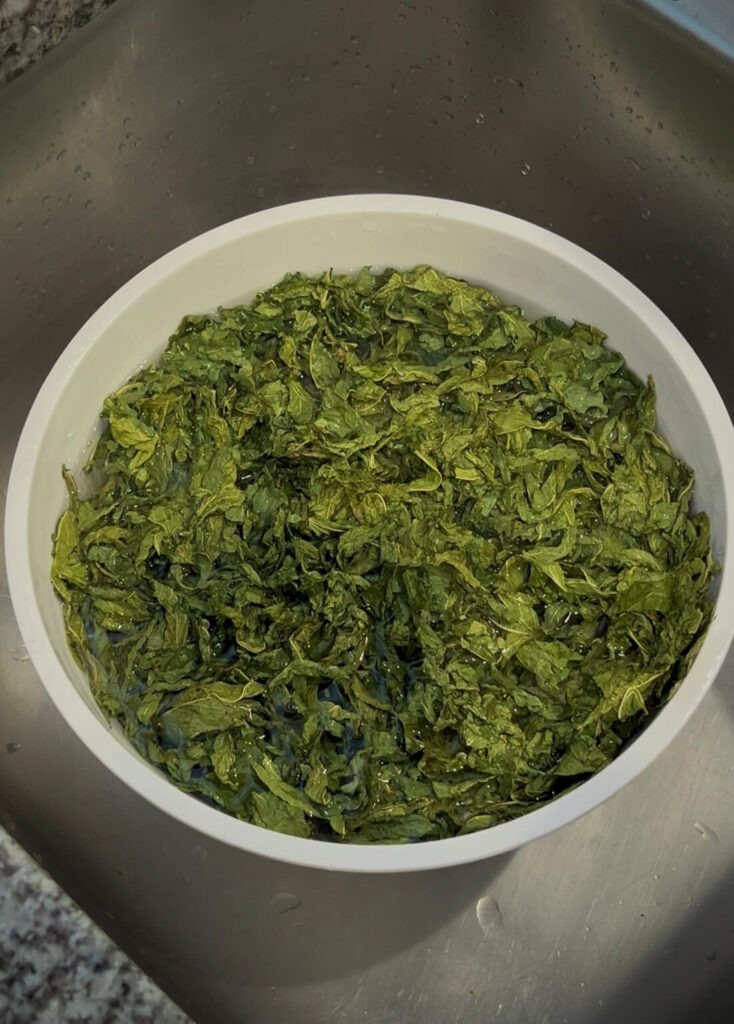
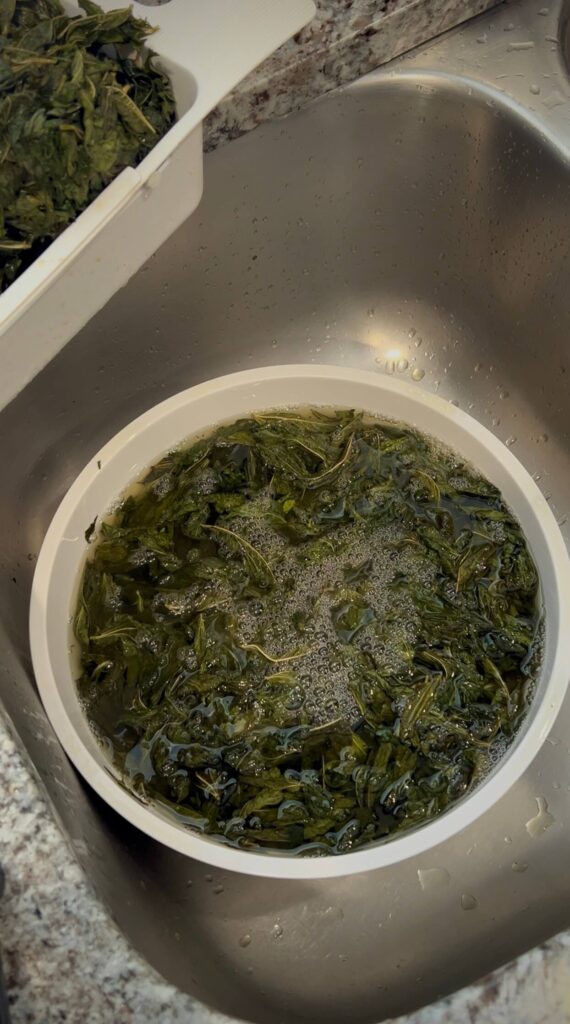
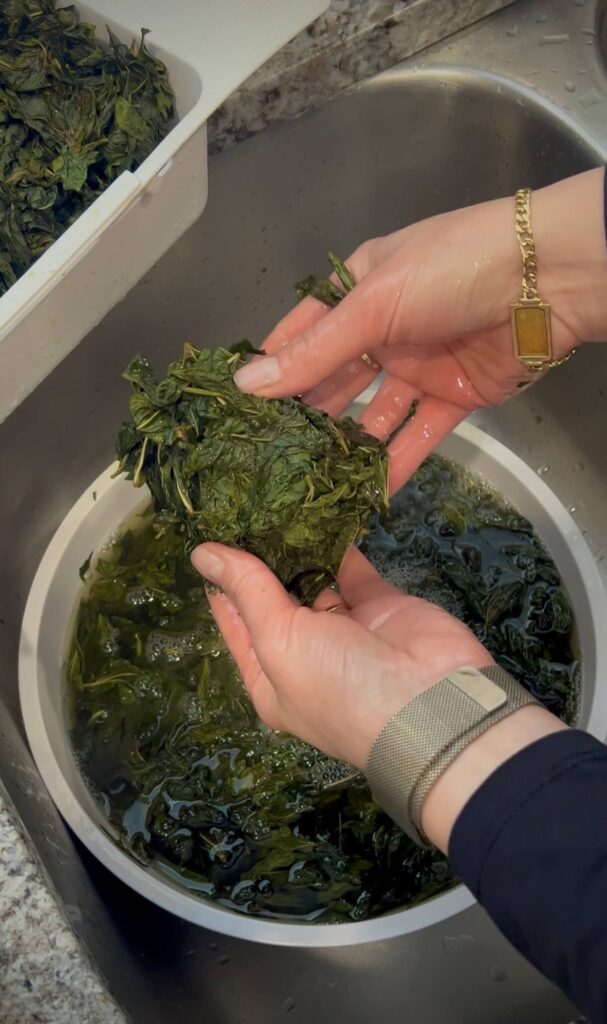
Soak the leaves in warm water, then wash them several times until the water runs clear. Remove any slimy leaves. - Drain and dry
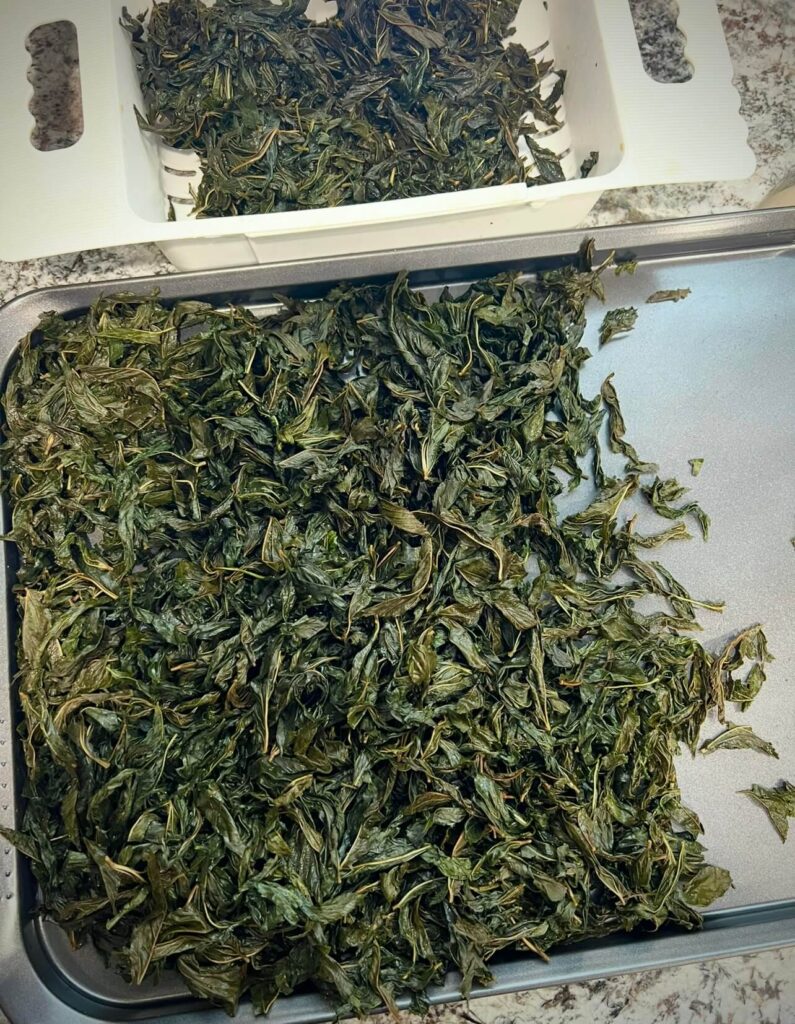
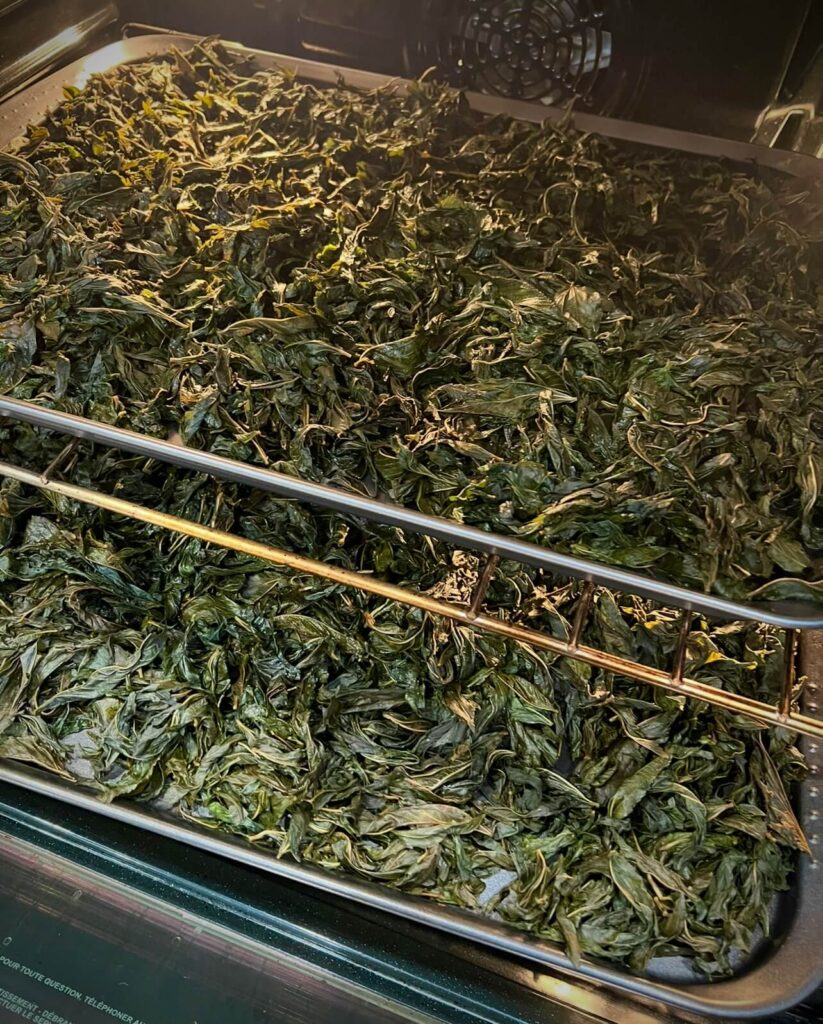
Squeeze out excess water and place the leaves in a strainer. Spread them on a baking tray and lightly bake until dry and fragrant. - Prepare the chicken broth
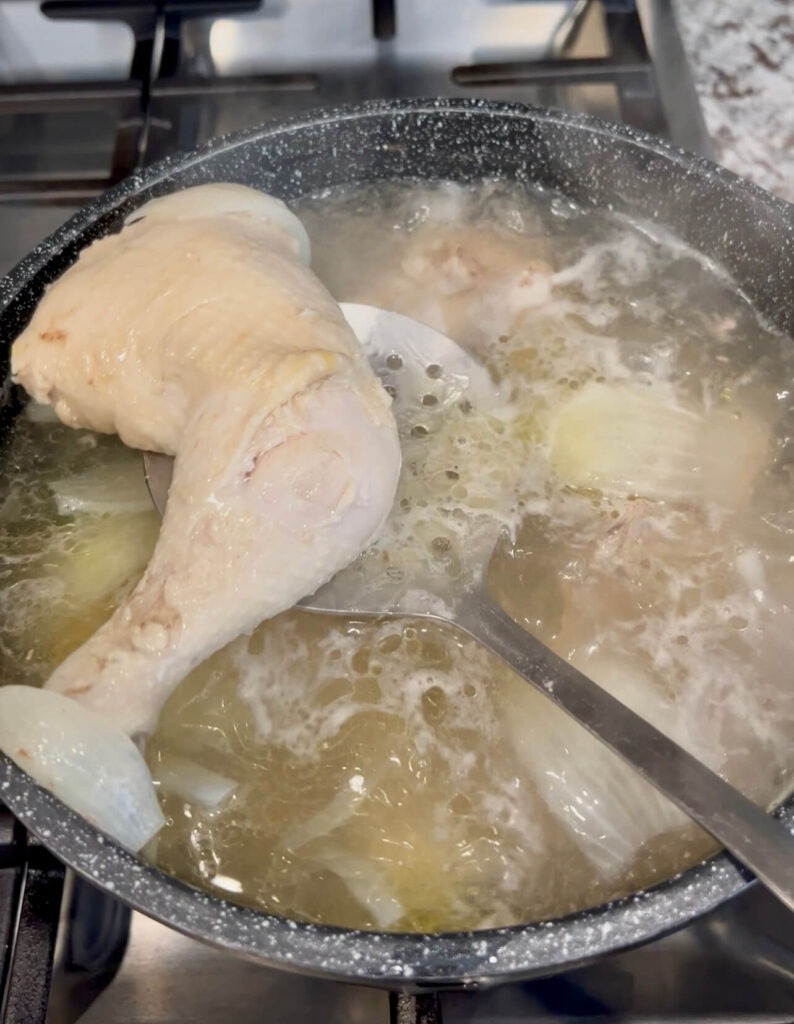
Cook chicken with onion, garlic, bay leaf, and cinnamon, skimming off any foam. Strain the broth and set aside. - Sauté the aromatics
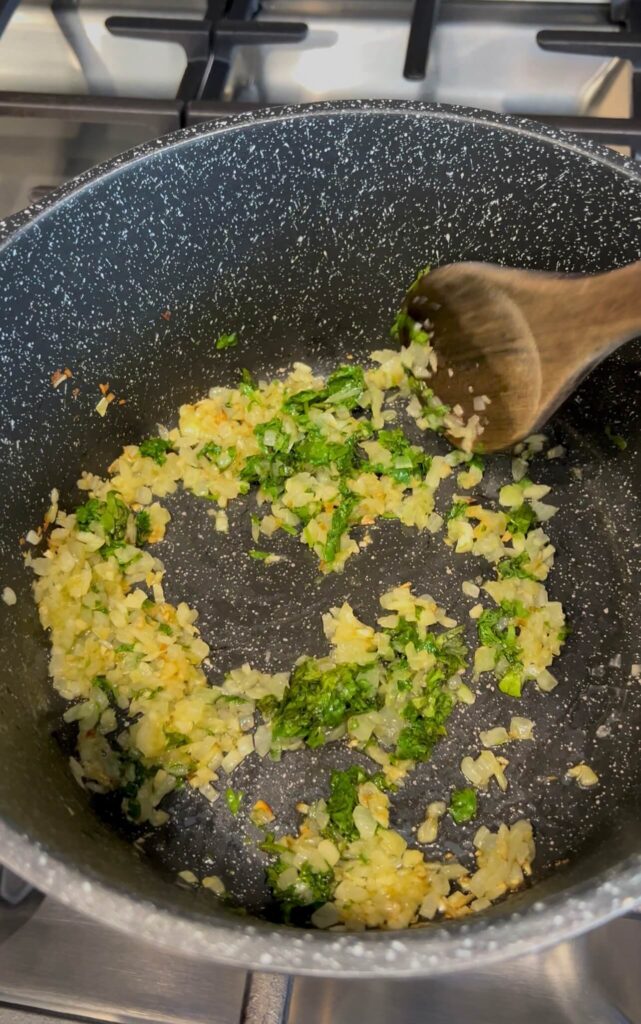
In a separate pot, sauté onion and garlic in olive oil until fragrant, then add fresh cilantro. - Add the molokhia
Stir in the dried molokhia leaves until coated with the aromatic mixture. - Simmer in broth
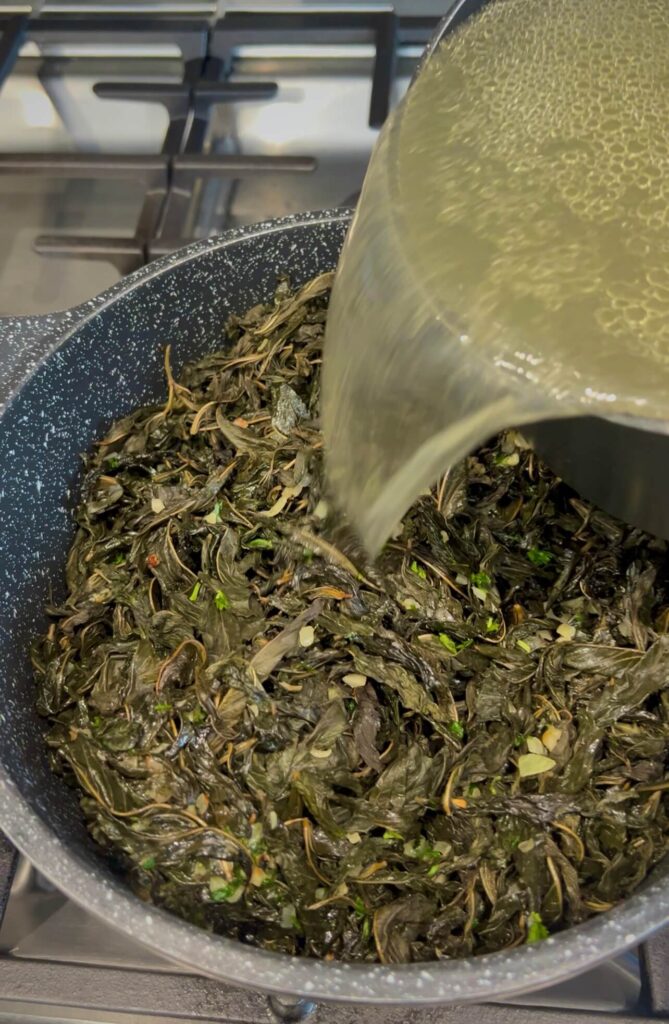
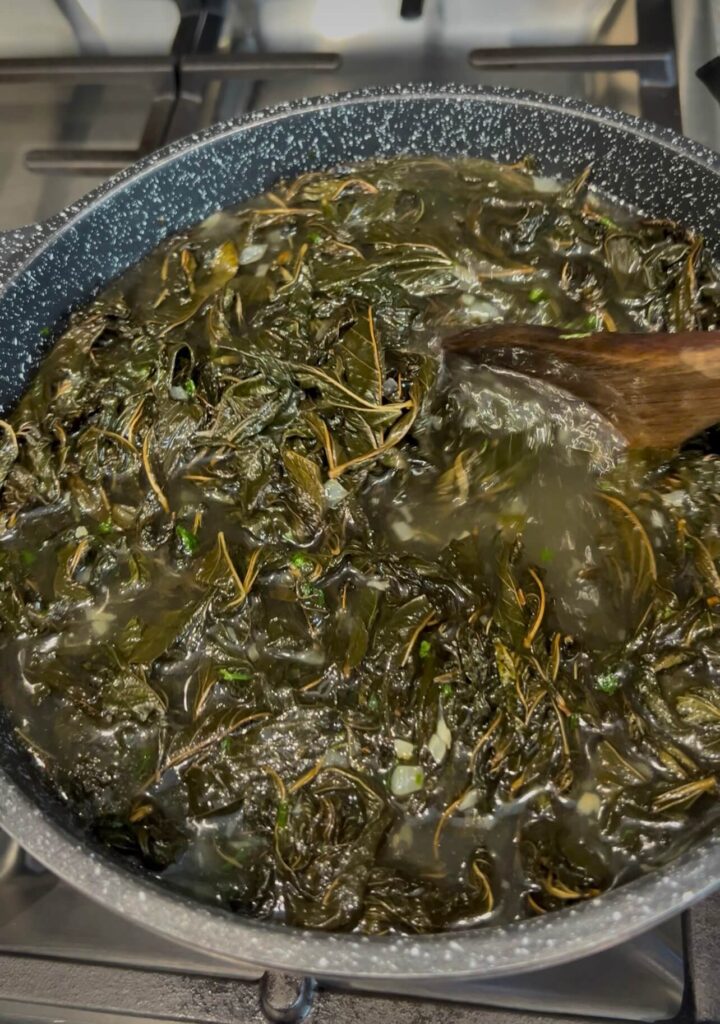
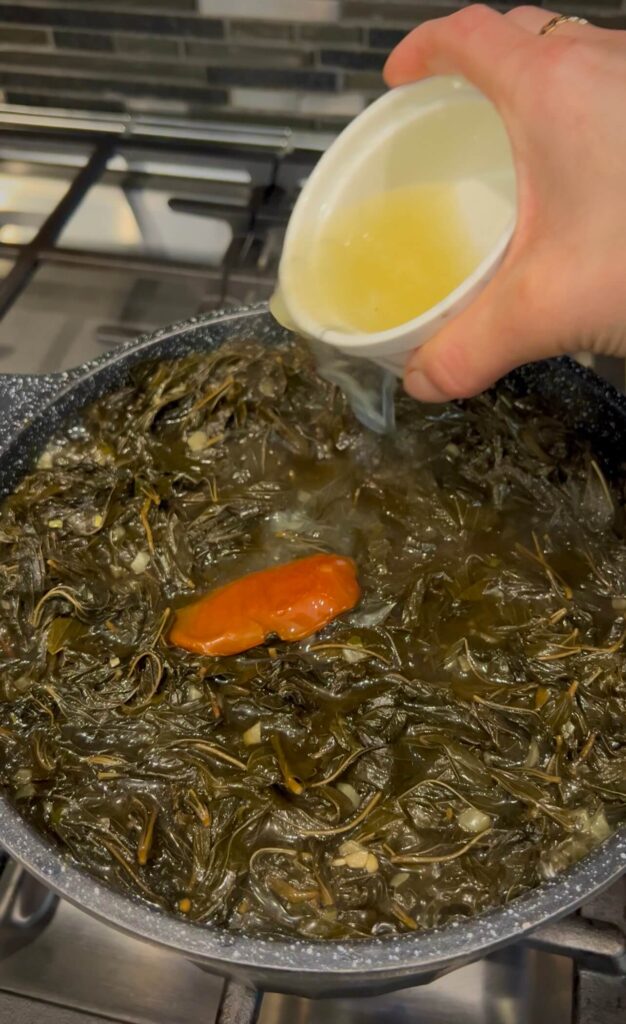
Pour in the chicken broth until it slightly covers the molokhia. Season and let it simmer gently until tender. - Finish the dish
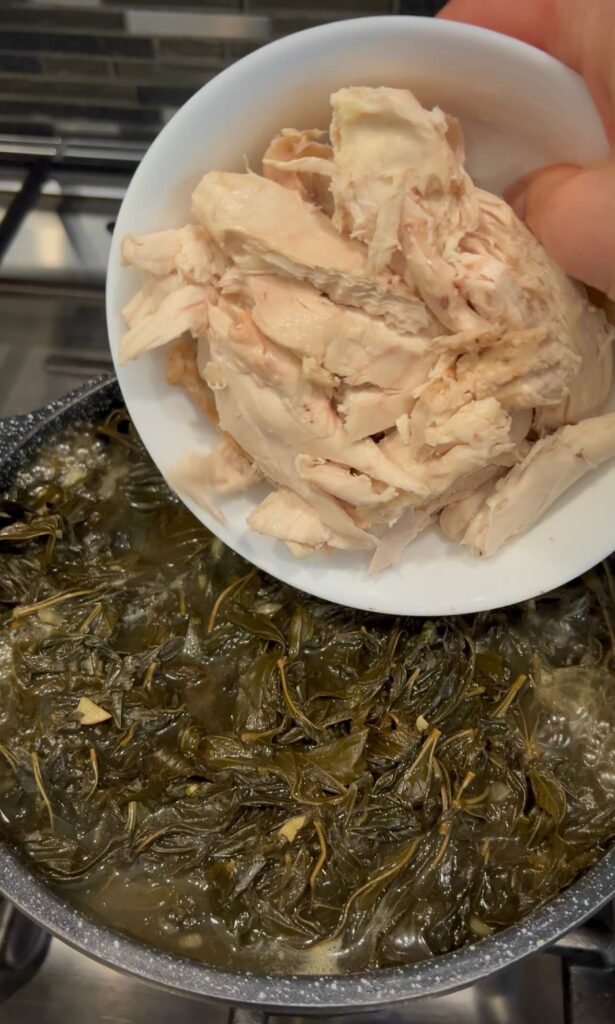
Add tomato, lemon juice, and the cooked chicken. Simmer briefly to bring everything together. - Optional final touch
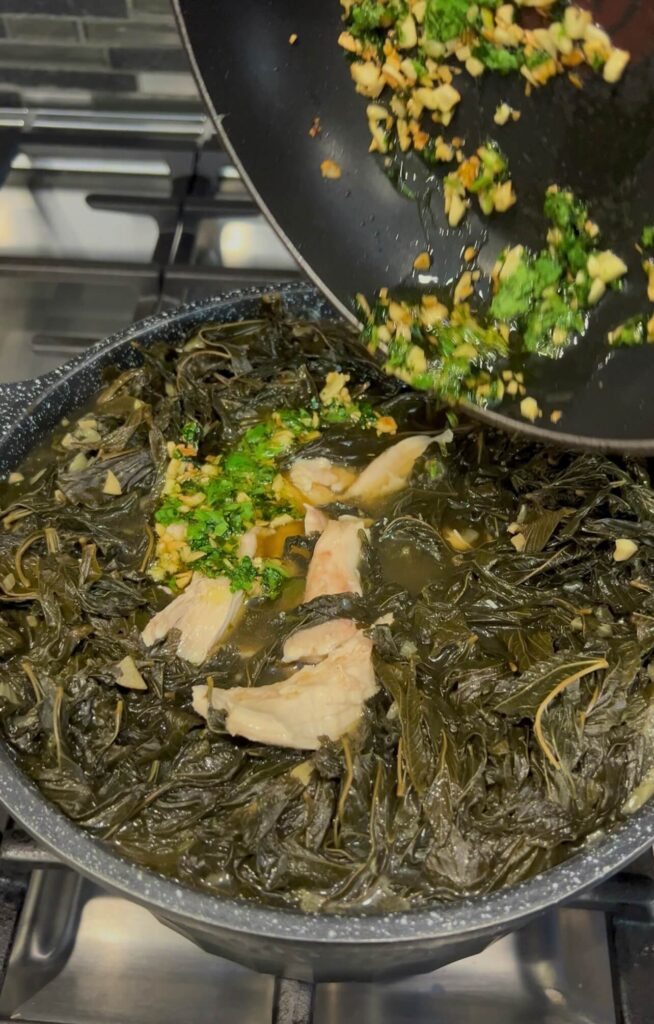
Sauté extra garlic and cilantro and spoon it on top for extra flavor. - Serve
Enjoy with vermicelli rice, crunchy pita bread, and extra lemon or onion-lemon sauce on the side.
Different ways to prepare and store Molokhia
- Cleaned and Stored Raw for Longer Freshness
Another option is to clean the molokhia leaves carefully, removing any bad leaves or debris, then place them in sealed bags. Storing them this way helps them last longer. You can freeze them, and when ready to use, simply take the bag out of the freezer, open it, and place the leaves in warm water. The leaves will begin to separate naturally, making them easy to cook.
- Cleaned, Washed, and Frozen (Ready to Cook)
You can clean the molokhia leaves, wash them well, and dry them completely. Once dry, place them in ziplock or vacuum-sealed bags and freeze them. When you’re ready to use them, simply prepare your chicken broth and cook the molokhia directly—no extra prep needed. This method is perfect for quick meals.
3.Fully Cooked and Frozen (Ready to Heat)
Molokhia can also be cooked completely, then allowed to cool. Once cooled, transfer it into airtight containers and freeze. When needed, remove a container from the freezer and let it defrost halfway. Place it in a pot, cover, and warm it gently on low heat until heated through. Serve with rice and enjoy—this method makes mealtime effortless.
How to store leftover Molokhia?
Molokhia stores very well and tastes just as delicious the next day when handled properly.
In the Refrigerator
Allow the molokhia to cool completely, then transfer it to an airtight container. Store in the fridge and consume within 3–4 days. Reheat gently on low heat to maintain its texture and flavor.
In the Freezer
For longer storage, place cooled molokhia in freezer-safe containers or sealed bags. Freeze for up to 3 months. When ready to use, let it thaw halfway, then warm it slowly on low heat until heated through.
Reheating Tips
- Always reheat on low heat to prevent separation.
- Stir occasionally and add a splash of water or broth if needed.
- Add fresh lemon juice after reheating for the best flavor.
Using meat instead of chicken in Molokhia
1. Choose your meat
Beef, lamb, or even turkey can be used instead of chicken. Cuts with bones work best because they create a rich, flavorful broth.
2. Prepare the broth
Cook the meat with water, onion, garlic, bay leaf, and optional cinnamon stick, just like you would for chicken. Skim off any foam that rises to keep the broth clear.
3. Adjust cooking time
Different meats take different cooking times. Beef or lamb may need longer to become tender compared to chicken.
4. Follow the same molokhia steps
Once the meat is cooked and the broth is ready, continue with the usual molokhia process: sauté aromatics, add cilantro, add the molokhia leaves, pour in the broth, and simmer gently.
5. Finish with lemon
Add lemon juice at the end to brighten the flavor, just like in the classic Lebanese version.
6. Serve as usual
Enjoy with vermicelli rice, pita bread, or lemon-onion sauce for a complete and comforting meal.
How to make vegetarian Molokhia?
1. Replace the chicken broth
Use vegetable broth instead of chicken broth. For extra depth, simmer your broth with onion, garlic, bay leaf, and a cinnamon stick.
2. Keep the aromatics
Sauté onion, garlic, and cilantro just like in the traditional recipe. These aromatics give molokhia its signature flavor.
3. Optional flavor boosters
- Add a vegetable bouillon cube for a richer taste.
- Include mushrooms or chickpeas for extra texture and protein.
4. Finish with lemon
As always, add lemon juice at the end. It brightens the flavor and balances the richness of the greens.
5. Serve the same way
Pair vegetarian molokhia with vermicelli rice, pita bread, and lemon-onion sauce for a complete meal.
Frequently asked questions
1. Can I use fresh molokhia leaves instead of dried?
Yes! Fresh molokhia works beautifully. Wash and remove any stems, then either leave the leaves whole or chop them. Fresh leaves cook faster than dried.
2. How do I prevent molokhia from becoming slimy?
Add a bit of tomato or lemon juice while cooking and simmer gently on low heat. Avoid overcooking the leaves to maintain a pleasant texture.
3. Can I make molokhia ahead of time?
Yes! You can freeze cleaned molokhia leaves ready to cook, or cook it fully, cool it, and store it in containers. Reheat gently on low heat when ready to serve.
4. How long does leftover molokhia last?
- In the fridge: 3–4 days in an airtight container.
- In the freezer: Up to 3 months. Thaw halfway before reheating.
5. Can I make vegetarian molokhia?
Absolutely! Use vegetable broth instead of chicken and keep the garlic, cilantro, and lemon for flavor.
6. Can I use meat other than chicken?
Yes! Beef, lamb, or turkey work well. Bone-in cuts give the best flavor for the broth, but adjust cooking times depending on the meat.
7. What should I serve molokhia with?
Traditionally, it’s served with vermicelli rice, crunchy pita bread, and a squeeze of lemon. Optional toppings include lemon-onion sauce or a mix of lemon juice, vinegar, and onion.
8. Can I make it spicy?
Yes! Add black pepper, chili, or your favorite spices. Traditional Lebanese molokhia is usually mild, letting the garlic, cilantro, and lemon shine.
9. Can I use store-bought broth?
Yes, but homemade chicken or vegetable broth gives the richest flavor. You can also enhance store-bought broth with a bouillon cube if needed.
10. Can molokhia be frozen after cooking?
Yes! Cool it completely, store in airtight containers, and freeze. Reheat gently on low heat to preserve texture and flavor.
Tips and Tricks
1. Always clean the leaves well – Remove any bad leaves, stems, or debris before soaking or cooking for the best texture and flavor.
2. Soak and rinse thoroughly – Washing the leaves several times removes excess slime and ensures a fresh, clean taste.
3. Lightly bake or dry the leaves – After washing, spreading them on a tray and baking briefly enhances flavor and reduces moisture.
4. Simmer gently – Cook on low heat to prevent overcooking and maintain a tender, perfect texture.
5. Add tomato or lemon – These help reduce sliminess and brighten the flavor of the molokhia.
6. Use a flavorful broth – Homemade chicken or vegetable broth gives the richest taste; a bouillon cube works too if needed.
7. Fresh aromatics at the end – Sautéed garlic and cilantro added before serving take the flavor to the next level.
8. Store smart – Freeze cleaned leaves ready to cook, or fully cooked molokhia in containers. Reheat gently on low heat to enjoy later.
9. Serve with sides – Pair with vermicelli rice, crispy pita, and lemon-onion sauce for the classic Lebanese experience.
10. Customize your seasoning – Try black pepper, seven spice, or a touch of chili to give it your personal flavor twist.
More recipes to try
Molokhia
Ingredients
- 250 g dried molokhia leaves
- 1 onion chopped
- 10 –12 garlic cloves minced
- ½ –1 cup fresh cilantro finely chopped
- 4 tbsp olive oil
- 1 bay leaf
- 1 small tomato or ½ cup cherry tomatoes chopped
- Salt and pepper to taste
- Optional: 7 spice
- Optional: 1 chicken bouillon cube for extra flavor in the broth
For the chicken broth
- 1 kg whole chicken cut into pieces (with bones for best flavor)
- 1 cinnamon stick
- 4 garlic cloves
- 1 onion
- 1 bay leaf
- About 2 liters hot water or enough to cover the chicken
Instructions
- If using store-bought dried molokhia leaves, check them carefully and remove any bad leaves, paper, or small rocks.
- (I usually have mine cleaned and vacuum-sealed, so it’s ready to soak and wash.)
- Soak the molokhia leaves in warm water for a couple of hours.
- Wash the leaves several times until the water runs clear. This may take 5–6 rinses. Remove any slimy leaves.
- Squeeze out excess water and place the leaves in a strainer until all batches are done.
- Spread the molokhia leaves on a baking tray and bake at 400°F (200°C) for about 15 minutes, stirring every 5 minutes to dry them evenly.
- In a large pot, add the chicken pieces and cover with hot water.
- When white foam appears on top, skim it off. Add the cinnamon stick, garlic, onion, and bay leaf.
- Cook for about 15 minutes, then turn off the heat.
- Strain the broth and set it aside for the molokhia. Leave the chicken in a little broth so it stays juicy.
- In another pot, sauté the chopped onion and garlic in olive oil until fragrant.
- Add the chopped cilantro and mix well.
- Add the baked molokhia leaves and stir.
- Pour in the chicken broth (and extra water if needed). The liquid should be slightly more than the molokhia.
- Season with salt, pepper, and optional 7 spice.
- Add the chopped tomato (optional but recommended—it adds flavor and helps reduce sliminess).
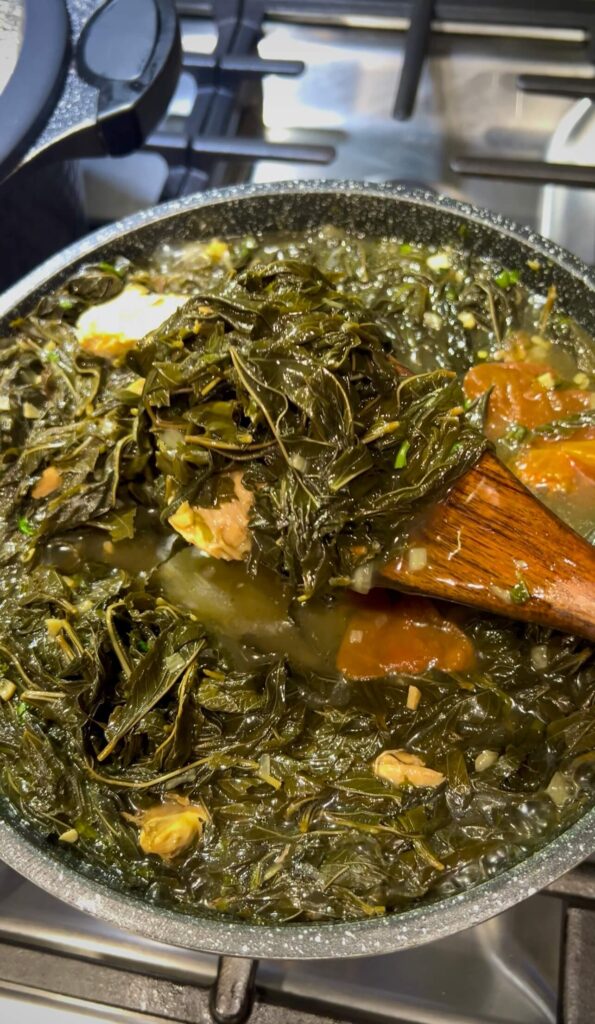
- Bring to a boil, then cover and simmer on low for about 1 hour, adjusting the time depending on how soft you like your molokhia.
- (I like mine very soft, so I cook it a little longer.)
- Once fully cooked, add lemon juice to taste and the chicken, cut into smaller pieces.
- Optional: Sauté extra garlic and cilantro and add it on top for extra flavor.
- If you like a richer broth, you can also add 1 chicken bouillon cube at the end.
Notes
- Molokhia leaves vary in texture: Some are more tender than others, so adjust cooking time based on your preference.
- Prevent sliminess: Adding tomato or lemon juice helps keep the leaves from getting too slimy.
- Adjust broth for taste: Homemade broth gives the best flavor, but store-bought broth or a bouillon cube works fine.
- Storage tips: Cleaned leaves can be frozen raw, or the dish can be cooked and frozen for later. Reheat gently on low heat.
- Serving ideas: Pair with vermicelli rice, crispy pita, and a lemon-onion or lemon-vinegar-onion sauce for authentic flavor.
- Flavor variations: Black pepper, 7 spice, or a touch of chili can be added for a personal twist.
- Vegetarian option: Use vegetable broth and optional protein like chickpeas or mushrooms.
- Alternative meats: Lamb, beef, or turkey can replace chicken; adjust cooking time for tenderness.