Stuffed onion also known as dolma, are one of the most beloved dishes across the Middle East. While every country has its own version, the heart of dolma remains the same — vegetables stuffed with rice and slow-cooked in a flavorful, tangy sauce until tender. In Iraq, it’s a staple at family gatherings, bringing warmth, comfort, and a sense of togetherness.
In Turkish and other Middle Eastern cuisines, dolma can be made with grape leaves, eggplants, zucchini, or peppers — but stuffed onions are truly special. When cooked slowly, they become soft, sweet, and buttery, wrapping perfectly around a seasoned rice filling. The balance of sweetness from the onions, tang from tomatoes and lemon, and a hint of sour pomegranate molasses makes every bite irresistible.
I grew up seeing dolma as a symbol of generosity and hospitality. My version is a simple vegetarian twist — hearty, flavorful, and full of authentic Middle Eastern taste. Even my kids love it, thanks to wholesome ingredients like rice, herbs, and olive oil, with a tangy, rich sauce that keeps you coming back for more.
Whether you’re discovering dolma for the first time or revisiting a classic, this recipe is a comforting, satisfying way to explore Middle Eastern cuisine.
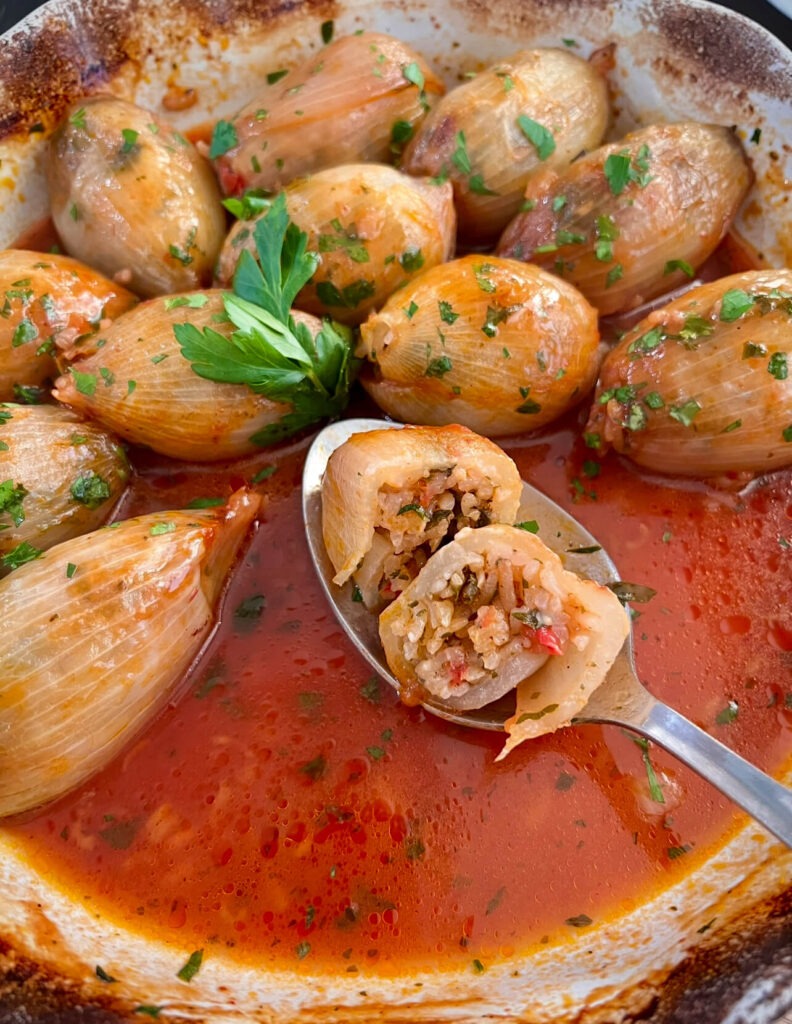
why I love to make stuffed onion
I love making this dish because it’s healthy, comforting, and packed with wholesome ingredients. Every bite is full of flavor from the herbs, olive oil, and pomegranate molasses — it’s simple yet incredibly satisfying. What makes it even better is how versatile it is. You can enjoy it completely vegetarian, just as I make it most of the time, or add a little ground beef or lamb to the rice filling if you prefer a heartier version. Either way, it turns out so delicious — light, flavorful, and nourishing. It’s one of those recipes that feels good to make and even better to eat.
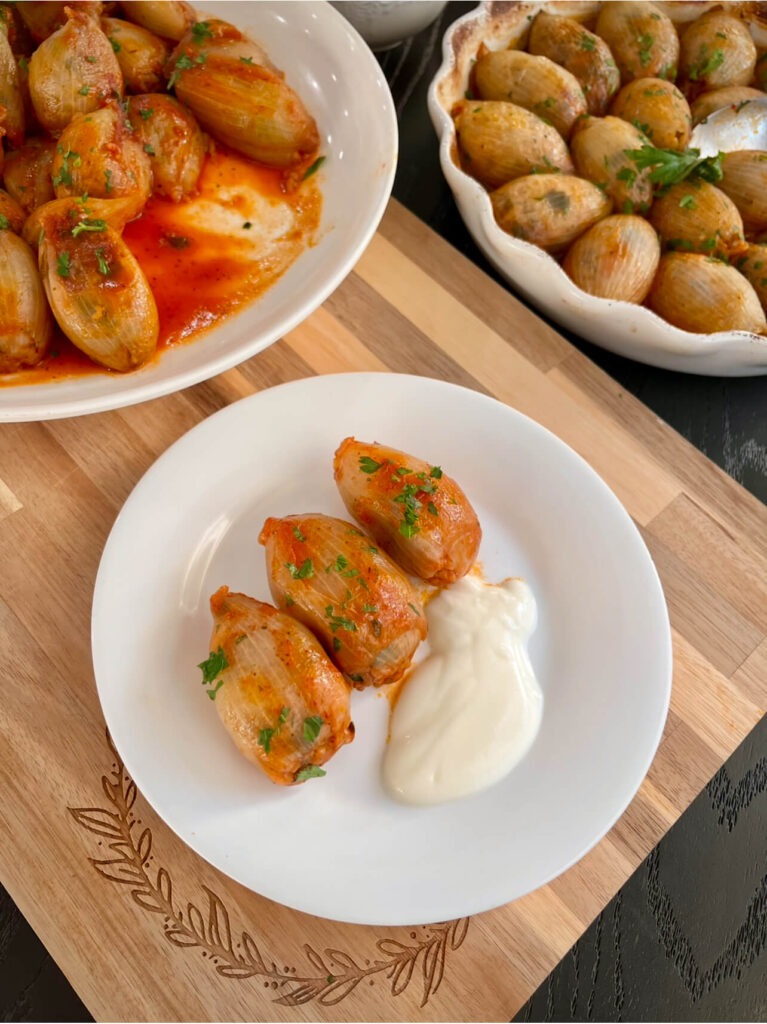
Stuffed onion ingredients
Onions: The star of the dish — once cooked, they turn soft, sweet, and melt in your mouth, wrapping perfectly around the rice filling.
Filling ingredients
Rice: Short-grain rice like Calrose works best because it becomes tender and slightly sticky, holding the filling together.
Parsley: Adds freshness and a burst of green color while balancing the richness of the filling.
Tomato: Gives natural sweetness and moisture to the rice mixture.
Onion (in the filling): Enhances the flavor and aroma, making the filling more fragrant and tasty.
Garlic: Adds depth and that signature Middle Eastern warmth to the dish.
Olive oil: Keeps the filling moist, adds richness, and gives the dolma its silky texture.
Lemon juice: Brings brightness and a tangy flavor that cuts through the sweetness of the onions.
Tomato paste: Thickens the sauce and adds a deep tomato flavor and beautiful color.
Pomegranate molasses: One of the key ingredients — gives a sweet and sour flavor that makes this dolma truly special.
Dried mint: Adds a cooling herbal note that pairs beautifully with the warm spices.
Salt and black pepper: Enhance all the flavors and balance the tanginess of the sauce.
7 spice: A Middle Eastern blend that brings warmth and depth — usually made with cinnamon, allspice, nutmeg, and cloves.
Paprika: Adds a hint of smokiness and color to the filling.
Sauce ingredients
Hot water: Helps dissolve the tomato paste and allows the flavors to blend together while cooking.
Lemon juice: Adds brightness and a tangy flavor that balances the sweetness of the onions.
Olive oil: Gives richness and helps the onions cook evenly, adding a silky texture to the sauce.
Pomegranate molasses: Adds that perfect sweet-and-sour flavor that makes Middle Eastern dolma so unique.
Tomato paste: Deepens the color and gives a rich tomato base for the sauce.
Salt: Brings all the flavors together and enhances the overall taste of the dish.
How to make stuffed onion?
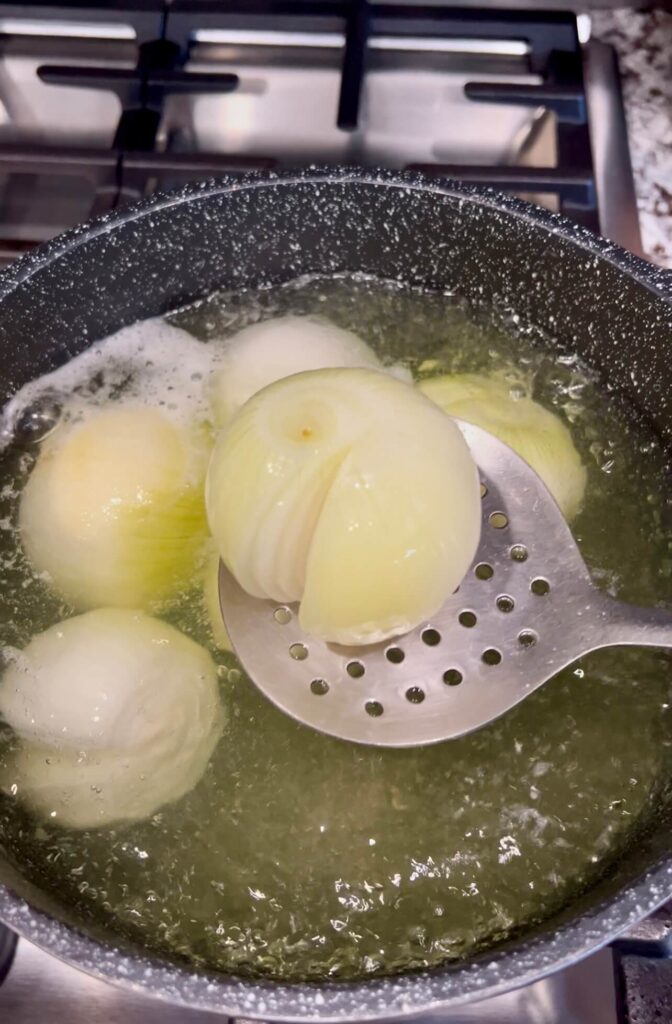
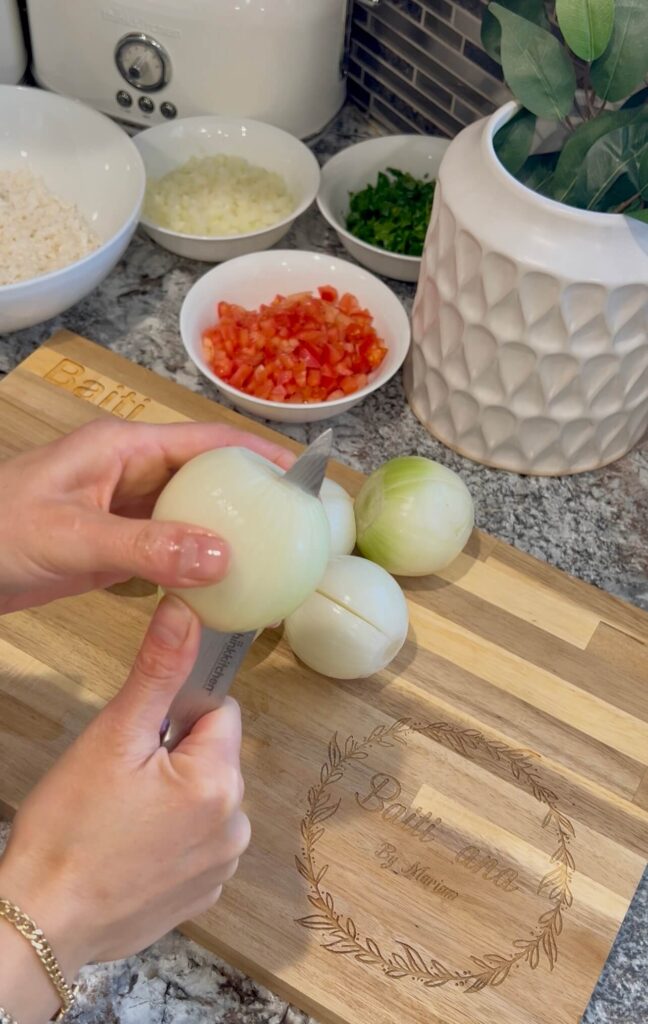
Step 1: Start by peeling the onions. Cut a line halfway through each onion from the top to the middle to help separate the layers later. Bring a large pot of water to a boil and add the onions. Let them cook for 5–10 minutes, or until the outer layers start to soften and can be separated.
Step 2:prepare the rice filling. Wash and drain the rice, then add the chopped parsley, tomato, onion, minced garlic, olive oil, lemon juice, tomato paste, pomegranate molasses, dried mint, salt, pepper, paprika, and 7-spice. Mix everything well until fully combined.
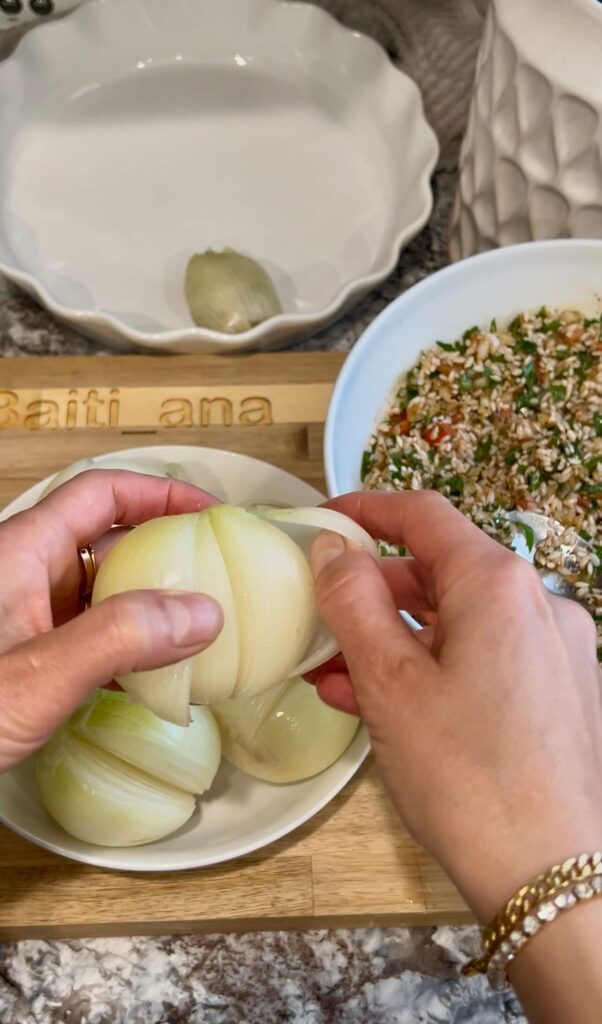
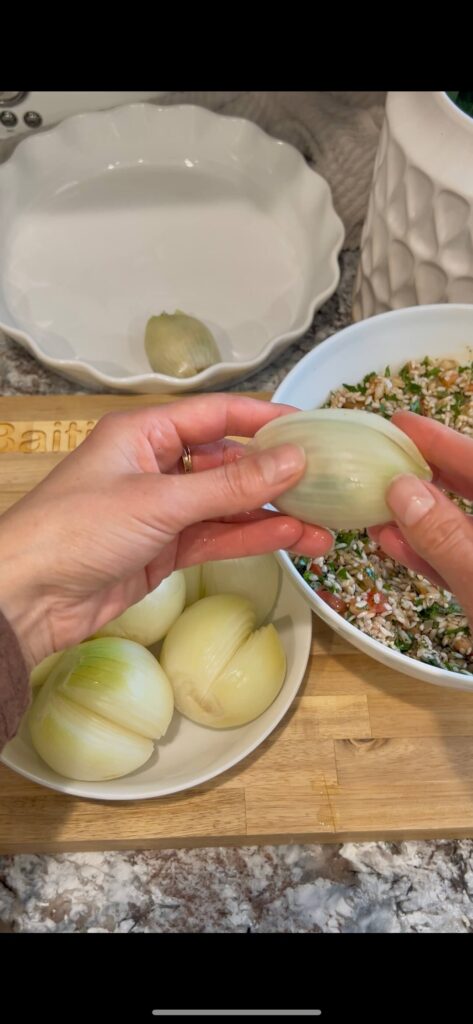
Step 3: Once the onions are soft, remove them from the pot and let them cool a bit. Carefully separate the layers one by one — if the center layers are still hard, return them to the hot water for a few more minutes until tender.
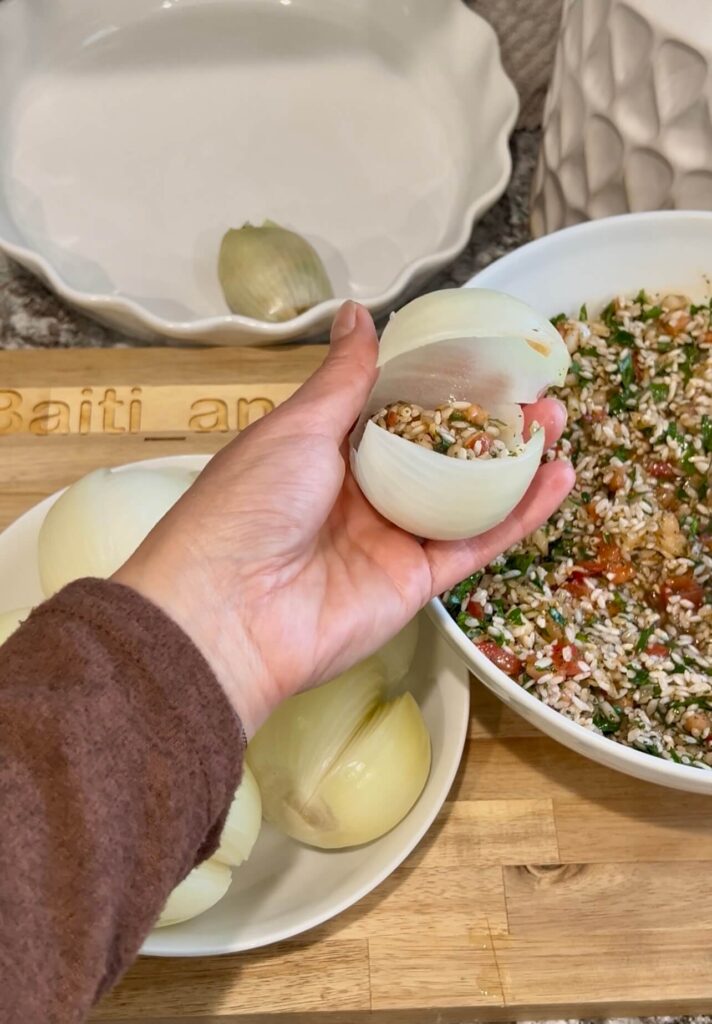
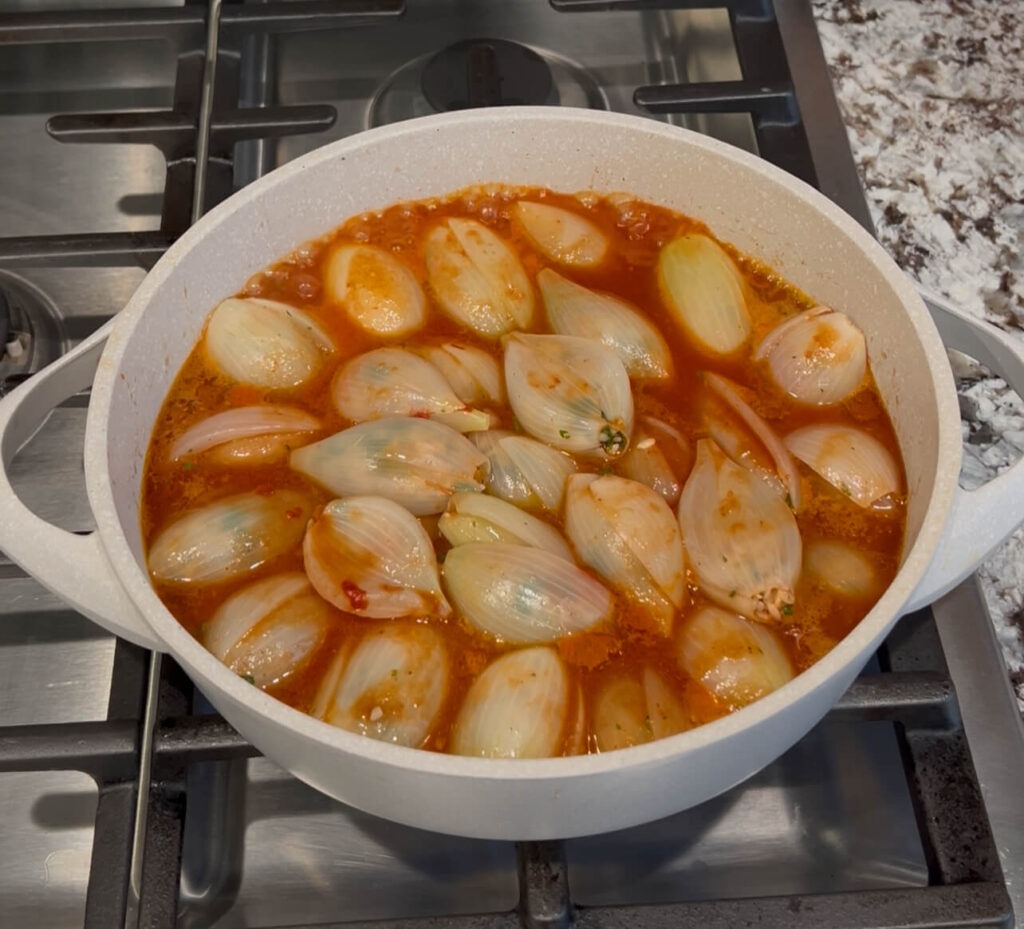
Step 4: Place a small spoonful of the rice mixture at one end of each onion layer, then roll or fold it closed. Arrange the stuffed onions snugly in a deep pot or oven-safe dish so they stay in place while cooking.
Step 5: In a bowl, mix together hot water, lemon juice, olive oil, pomegranate molasses, tomato paste, and salt.
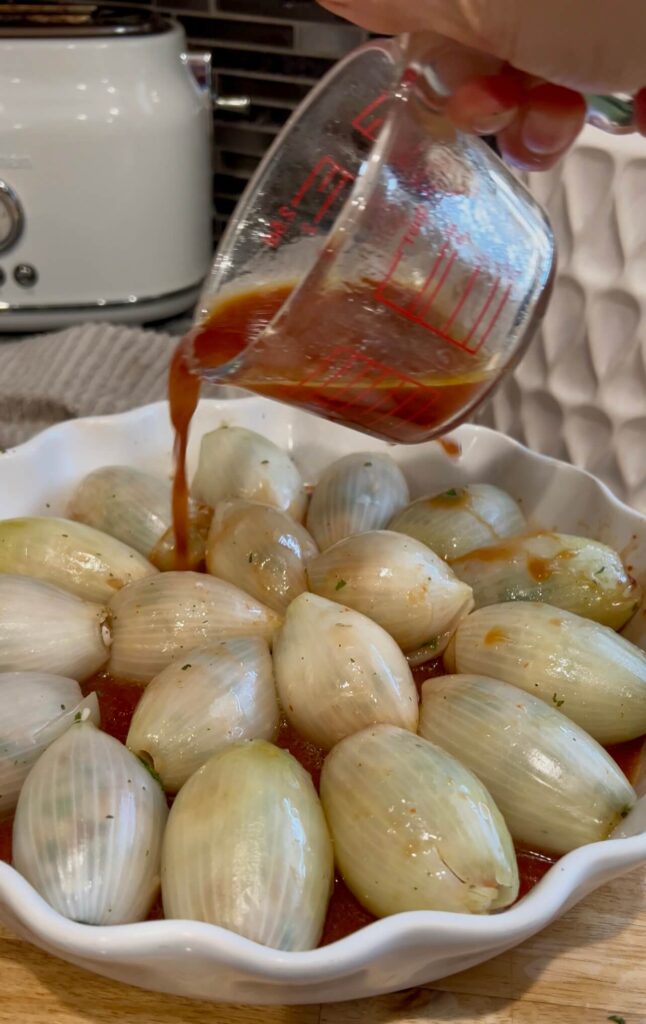
Step 6: Pour the sauce evenly over the stuffed onions.
- Stovetop method: Place a heat-resistant plate or small lid directly over the onions to keep them from moving. Bring to a boil, then cover, lower the heat, and cook on low for 30 minutes. Turn off the heat and let it rest, covered, for another 15–20 minutes to steam.
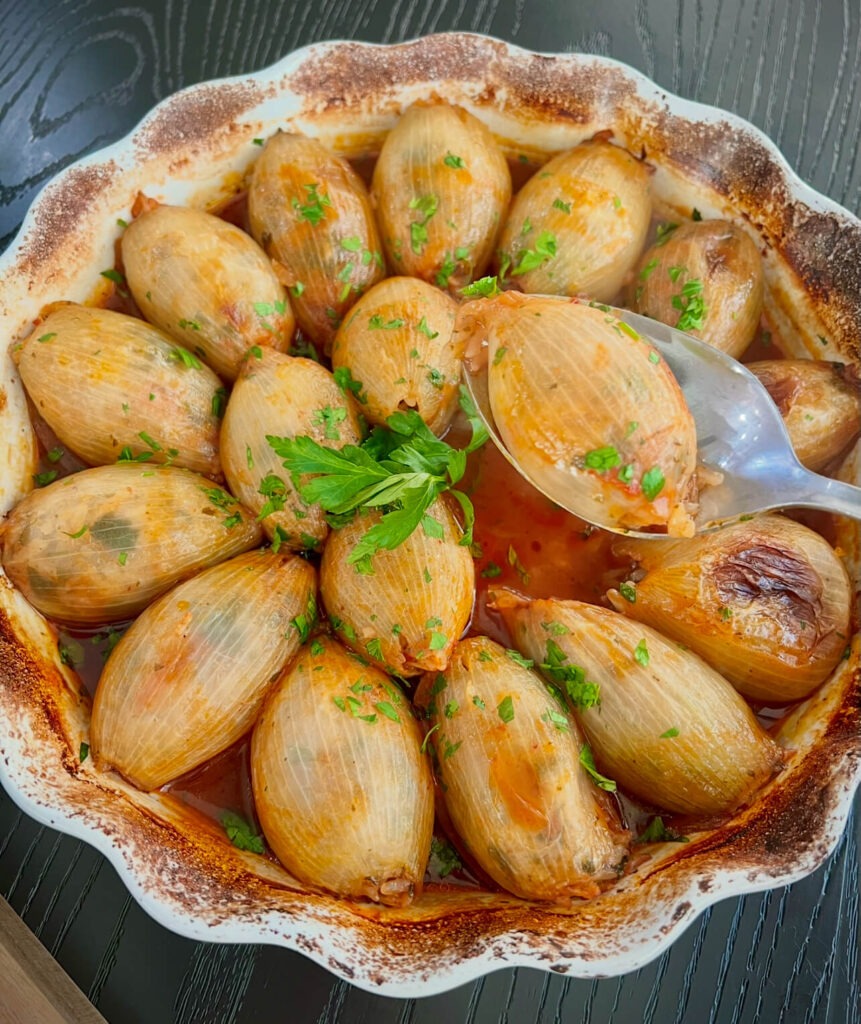
- Oven method: Cover the baking dish with foil and bake in a preheated 400°F (200°C) oven for about 45 minutes, or until the onions are soft and fully cooked.
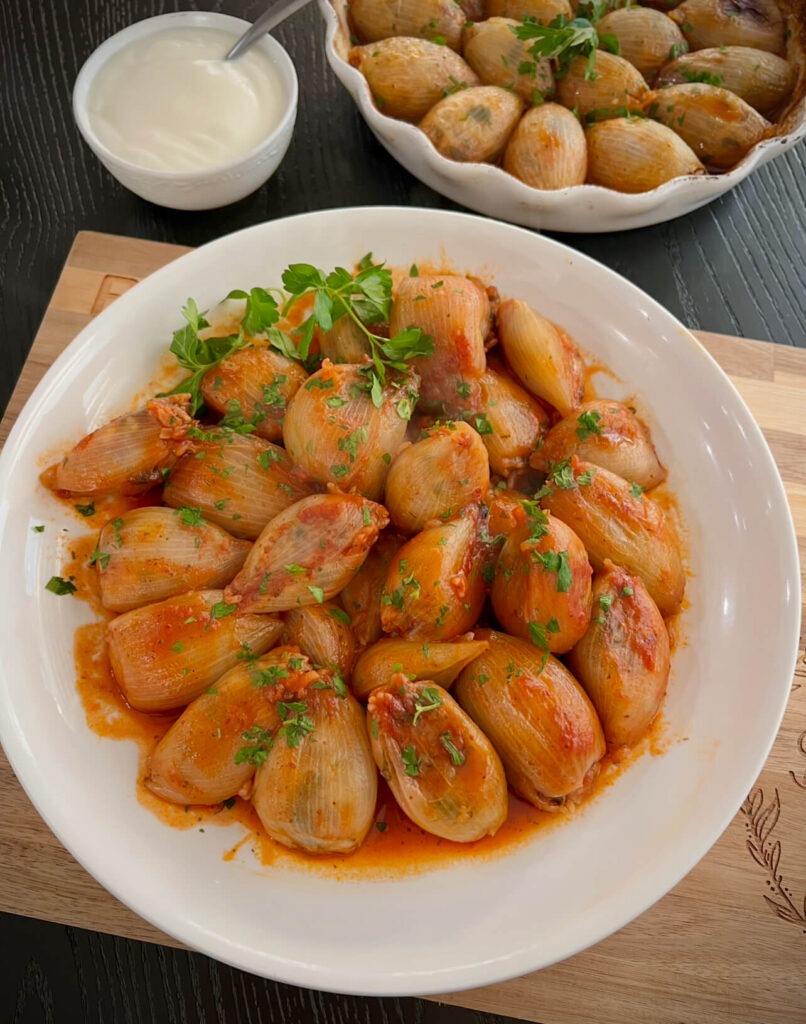
Garnish with fresh chopped parsley and serve warm with plain yogurt or pita bread.
Different ways to cook stuffed onion
There are several ways to cook stuffed onions, each giving a unique flavor and texture. You can simmer them on the stove, bake in the oven, or use a pressure cooker for a quicker version — all turn out delicious.
1. Stovetop (Traditional)
Arrange the stuffed onions snugly in a pot and pour the sauce over them.
Place a heatproof plate on top, bring to a gentle boil, cover, and cook on low for 30 minutes.
Let them steam for 15–20 minutes after cooking.
Tender onions with a perfectly balanced sweet and tangy sauce.
2. Oven-Baked
• Place the onions in a baking dish, pour the sauce, cover with foil, and bake at 400°F (200°C) for 45–50 minutes.
• The onions become soft with slightly caramelized edges and a thicker sauce.
3. Pressure Cooker / Instant Pot
• Arrange the onions in the cooker, pour the sauce, and cook on high pressure for 8–10 minutes.
• Let the pressure release naturally for 10 minutes.
Quick, tender, and flavorful, with a rich tangy sauce.
Each method brings its own charm: stovetop for traditional flavor, oven for caramelized depth, and pressure cooking for speed without losing taste.
Different stuffing ideas for stuffed onion
1. Vegetarian Herb Version:
For a lighter, plant-based twist, fill the onions with rice, fresh parsley, mint, tomatoes, onions, and garlic. Season with olive oil, lemon juice, and a pinch of salt and pepper. This version is fresh, fragrant, and full of Middle Eastern flavors — perfect for those who prefer a vegetarian meal.
2. Classic Meat Version:
My personal favorite is the traditional meat-filled dolma. Combine ground beef or lamb with rice, chopped parsley, tomatoes, and onions, and season with 7-spice, paprika, salt, pepper, olive oil, lemon juice, and pomegranate molasses. This version is hearty, flavorful, and wonderfully rich, making it ideal for family dinners or special occasions.
How to store stuffed onion?
Refrigerator:
- Allow the stuffed onions to cool completely before storing.
- Place them in an airtight container and keep in the fridge for up to 3–4 days.
- Reheat gently on the stovetop or in the oven, adding a splash of water or sauce to keep them moist.
Freezer:
- You can freeze stuffed onions before or after cooking.
- Wrap them tightly in foil or place them in a freezer-safe container with the sauce.
- Freeze for up to 2–3 months.
- To reheat, thaw overnight in the fridge, then warm gently on the stovetop or in the oven until heated through.
Frequently asked questions
1. Can I make dolma ahead of time?
Yes! You can prepare the stuffed onions a few hours or even a day ahead. Keep them covered in the fridge until you’re ready to cook. This also helps the flavors meld together.
2. Can I use other types of rice?
Short-grain rice, like Calrose, works best because it becomes tender and slightly sticky, holding the filling together. You can also use medium-grain rice, but avoid long-grain rice, as it may be too dry.
3. How do I prevent the onions from tearing?
Peel carefully and make a precise cut halfway to the center. Cook them in boiling water until slightly soft before separating the layers — this makes stuffing easier and reduces tearing.
4. Can I freeze stuffed onions?
Yes! You can freeze them before or after cooking. Wrap tightly in foil or place in a freezer-safe container with the sauce. Freeze for up to 2–3 months. Thaw overnight in the fridge before reheating.
5. Can I make a vegetarian version?
Absolutely! Use rice with fresh herbs, tomatoes, onions, garlic, olive oil, and lemon juice. You can also add lentils or chickpeas for extra protein.
6. What is the best way to reheat leftovers?
Reheat slowly on the stovetop or in the oven, adding a splash of water or sauce to keep the onions tender and moist. Avoid microwaving for long periods, as it can dry them out.
7. Can I cook dolma in different ways?
Yes! You can cook them on the stovetop (traditional), bake in the oven, or use a pressure cooker/Instant Pot for a quick version. Each method produces slightly different textures but equally delicious results.
Tips and Tricks
- Choose the right onions: Large, firm onions work best. Avoid very small or soft ones, as they may fall apart while stuffing.
- Soften onions first: Boiling the onions briefly before stuffing makes separating the layers much easier and prevents tearing.
- Don’t overfill: Use a small spoonful of filling for each layer — the rice expands while cooking, so overstuffing can cause the onions to burst.
- Keep them snug: Arrange the stuffed onions tightly in the pot or baking dish so they hold their shape during cooking.
- Use a heatproof plate (stovetop): Placing a plate on top of the dolma while simmering prevents the onions from floating or opening.
- Balance flavors: A touch of lemon juice and pomegranate molasses in the filling and sauce gives that classic sweet-tangy flavor.
- Reheat gently: Always reheat slowly on the stovetop or in the oven with a splash of sauce to keep the onions tender and juicy.
- Make ahead: Dolma can be prepared a few hours or a day before cooking. This allows the flavors to meld beautifully.
- Freezing tips: You can freeze dolma before or after cooking. Wrap tightly or use a freezer-safe container with the sauce to preserve flavor.
- Serving ideas: Serve warm with plain yogurt, fresh parsley, pita bread, or a simple salad for a complete Middle Eastern meal.
More recipes to try
vegetarian stuffed grape leaves
Stuffed Onion
Ingredients
For the onions
- 8 large onions
- Hot water for softening the onions
- Chopped parsley for garnish
For the stuffing
- 2 cups short-grain rice I use Calrose rice
- 1 cup chopped parsley about 1 bunch
- 1 large tomato finely chopped
- 1 large onion finely chopped
- 2 garlic cloves minced
- ¼ cup olive oil
- ¼ cup lemon juice
- 1 tbsp tomato paste
- 1 tbsp pomegranate molasses
- 2 tbsp dried mint
- 2 tsp salt
- ½ tsp black pepper
- 1 tsp 7-spice
- 1 tsp paprika
For the sauce
- 2 cups hot water
- ¼ cup lemon juice
- 2 tbsp olive oil
- 1 tbsp pomegranate molasses
- 2 tbsp tomato paste
- 1 tsp salt
Instructions
- Prepare the onions:
- Bring a large pot of water to a boil. Peel the onions, then make a cut halfway through each one (just to the center — this helps separate the layers).
- Add the onions to the boiling water and cook for about 5–10 minutes, or until they begin to soften and the layers start to separate.
- Prepare the stuffing:
- While the onions are cooking, rinse and drain the rice.
- In a large bowl, combine the rice, chopped parsley, tomato, onion, minced garlic, lemon juice, olive oil, pomegranate molasses, tomato paste, dried mint, salt, pepper, paprika, and 7-spice.
- Mix everything well, then set aside.
- Separate the onion layers:
- Once the onions are soft, remove them from the hot water and let them cool slightly. Gently separate the layers — if the center layers are still hard, return them to the hot water for a few more minutes until soft.
- Stuff the onions:
- Place about 1–2 teaspoons of the rice filling on each onion layer (depending on size), then roll or fold to close. Arrange the stuffed onions tightly in a deep pot or oven-safe baking dish.
- Make the sauce:
- In a bowl, mix together hot water, lemon juice, olive oil, tomato paste, pomegranate molasses, and salt until smooth and combined.
- Cook the dolma:
- Stovetop method:
- Pour the sauce over the stuffed onions. Place a heatproof plate or lid directly on top to keep them in place. Bring to a gentle boil, then reduce heat to low. Cover the pot and cook for 30 minutes. Turn off the heat and let it rest, covered, for another 15–20 minutes to steam.
- Oven method:
- Pour the sauce over the onions, cover the baking dish with foil, and bake in a preheated oven at 400°F (200°C) for about 45 minutes, or until the onions are tender and fully cooked.
- Serve and enjoy:
- Garnish with chopped parsley and serve warm with plain yogurt or pita bread. Each bite is perfectly soft, tangy, and full of flavor — a true Middle Eastern comfort dish!
Notes
- Use large, firm onions for easier stuffing.
- Soften onions in boiling water before separating the layers to prevent tearing.
- Don’t overfill the onion layers — rice expands as it cooks.
- You can make this recipe vegetarian or add ground meat for a classic version.
- Store leftovers in the fridge for 3–4 days or freeze for 2–3 months.
- Reheat gently on the stovetop or in the oven to keep onions tender and moist.