Traditional Lebanese Kibbeh, or Kibbeh Maklieh, is one of those recipes that holds a special place in my heart. It’s a dish I learned from my mom, who learned it from her mother, making it a recipe passed down through generations. It’s more than just food; it’s a little piece of our Lebanese heritage that brings back so many beautiful memories.
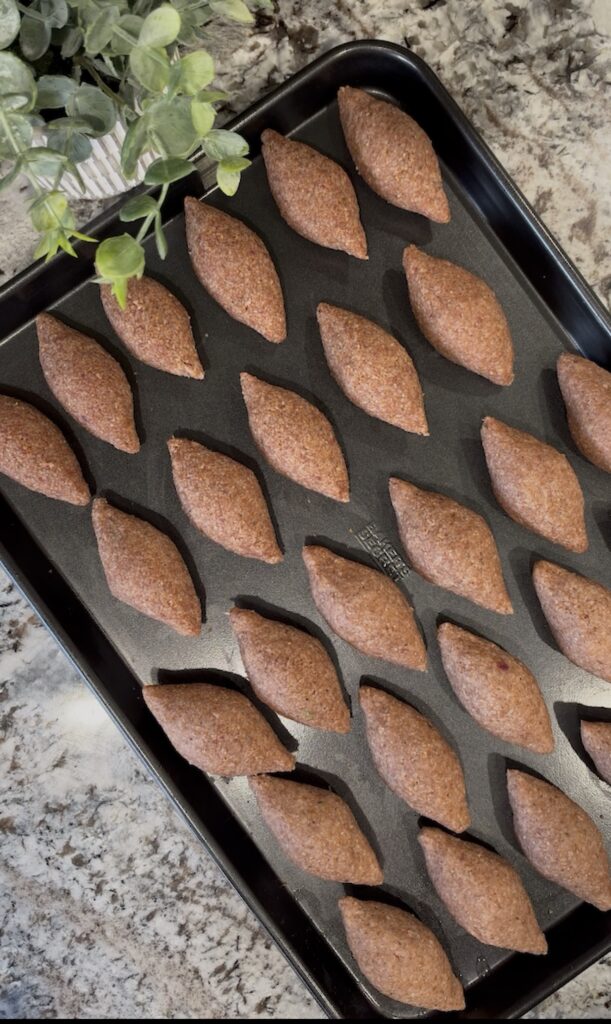
Made with fine bulgur wheat, extra-lean ground beef, onion, and warm Lebanese spices, the kibbeh dough is shaped into little football-like shells and filled with a delicious cooked ground beef filling. Each piece is carefully shaped by hand, then deep-fried until golden brown and crispy on the outside, while remaining tender, moist, and flavorful on the inside.
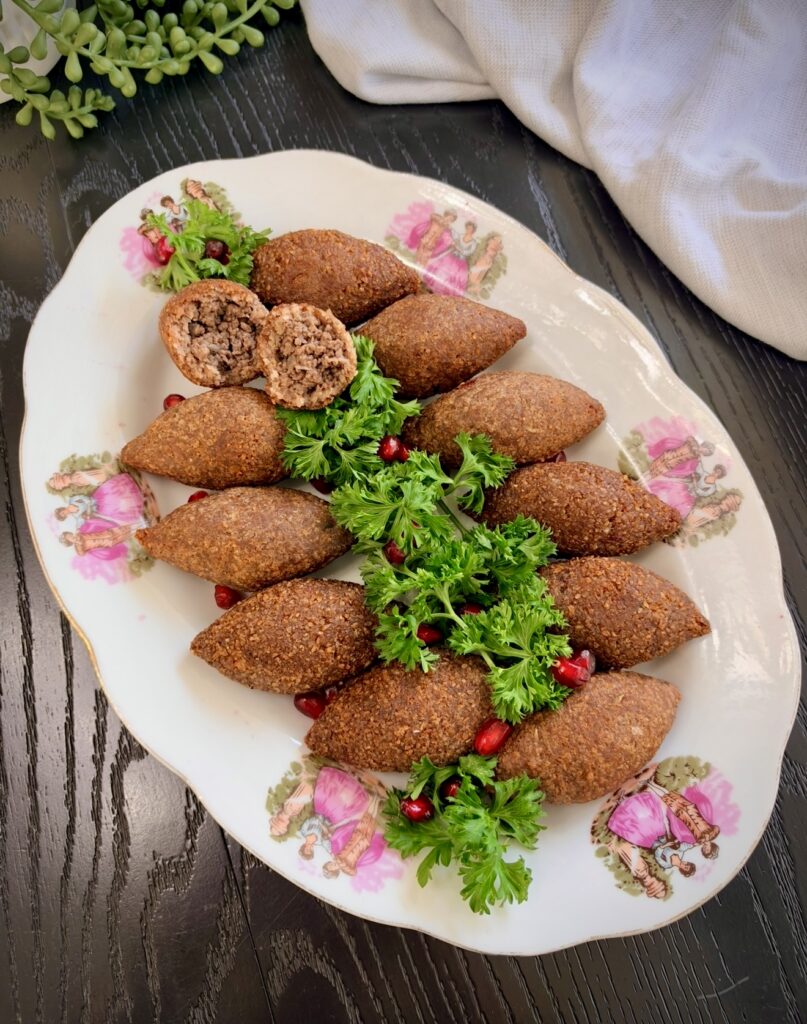
Kibbeh is one of the most beloved dishes in the Middle East, especially in Lebanon. No Lebanese maza spread feels complete without a plate of freshly fried kibbeh! It’s a staple appetizer served at family gatherings, celebrations, parties, and special occasions. It’s also the perfect finger food to serve when hosting because you can prepare it ahead of time, freeze it, and fry it whenever you’re ready.
Every family has its own little tricks for making kibbeh, and this is the traditional way my family makes it. Whether you’re making it for a special occasion or simply craving a taste of home, I hope you love this recipe as much as we do!
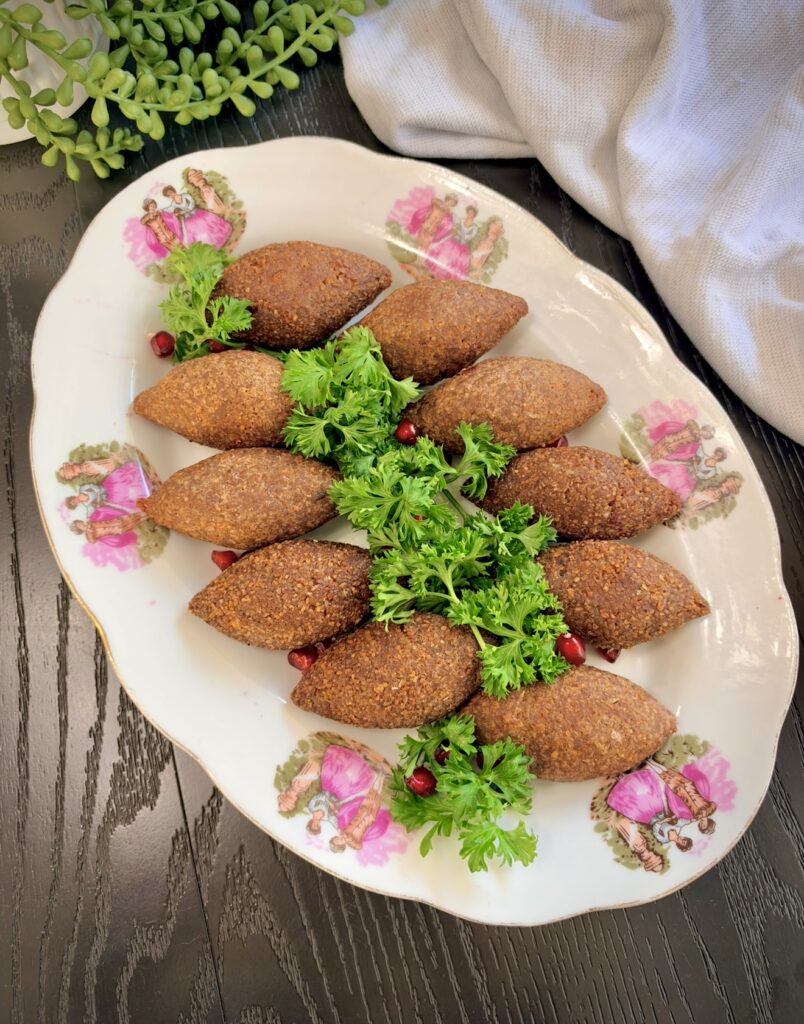
why you’ll love this recipe
A family recipe: Passed down from my grandmother to my mom and then to me.
Crispy and delicious: Golden, crunchy shells with a tender and flavorful meat filling.
Perfect for gatherings: A must-have appetizer for Lebanese celebrations and family dinners.
Freezer-friendly: Make them ahead and freeze them for an easy appetizer whenever you need.
Customizable filling: Add pine nuts, slivered almonds, or pomegranate seeds for extra flavor.
Traditional Lebanese Kibbeh ingredients
kibbeh dough
Extra-lean ground beef: Used to bind the bulgur and create a smooth, tender kibbeh dough.
Fine bulgur wheat: The base of traditional Lebanese kibbeh. Make sure to use fine bulgur, not coarse bulgur.
Onion: Adds flavor and moisture to the dough.
Salt: Enhances all the flavors.
Paprika: Adds warmth and a beautiful color.
Black pepper: Adds a little spice.
Kibbeh spice: Traditional kibbeh seasoning. You can substitute it with seven spice and cumin.
Cold water: Used as needed to help knead the dough and keep it soft and easy to shape.
kibbeh filling
Lean ground beef: The main ingredient for the flavorful filling.
Olive oil: Used to cook the ground beef and onion.
Onion: Adds sweetness and flavor to the meat filling.
Salt: Season to taste.
Seven spice: Gives the filling that classic Lebanese flavor.
Black pepper: Adds a little warmth.
Beef tallow, ghee, butter, or oil: Adds richness and moisture to the filling.
Pine nuts or slivered almonds: Optional, but highly recommended for extra crunch and flavor.
How to make traditional Lebanese kibbeh
- Prepare the filling
Heat olive oil in a skillet and cook the ground beef, breaking it apart.
Add the salt, seven spice, and black pepper.
Once the meat is almost cooked, add the chopped onion and cook for a few more minutes.
Add the beef tallow, ghee, butter, or oil and mix well. Add pine nuts or slivered almonds if desired.
Turn off the heat and set aside to cool completely.
2. Prepare the kibbeh dough
Wash the fine bulgur wheat, drain well, and let it rest for 5 minutes.
Blend the onion with 2 tablespoons of water until smooth.
Add the onion mixture and spices to the bulgur and mix well.
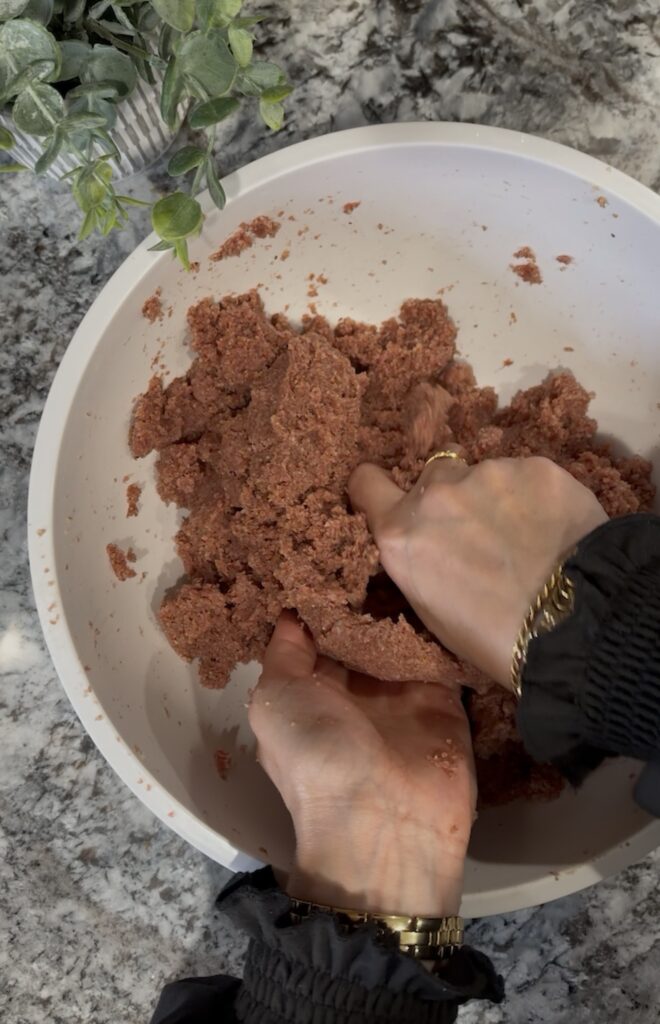
Then Add the extra-lean ground beef and knead until everything is well combined and the dough becomes soft and smooth.
Add a little cold water as needed while kneading. You can also use a food processor to make the dough extra smooth.
3. Shape and fill the kibbeh
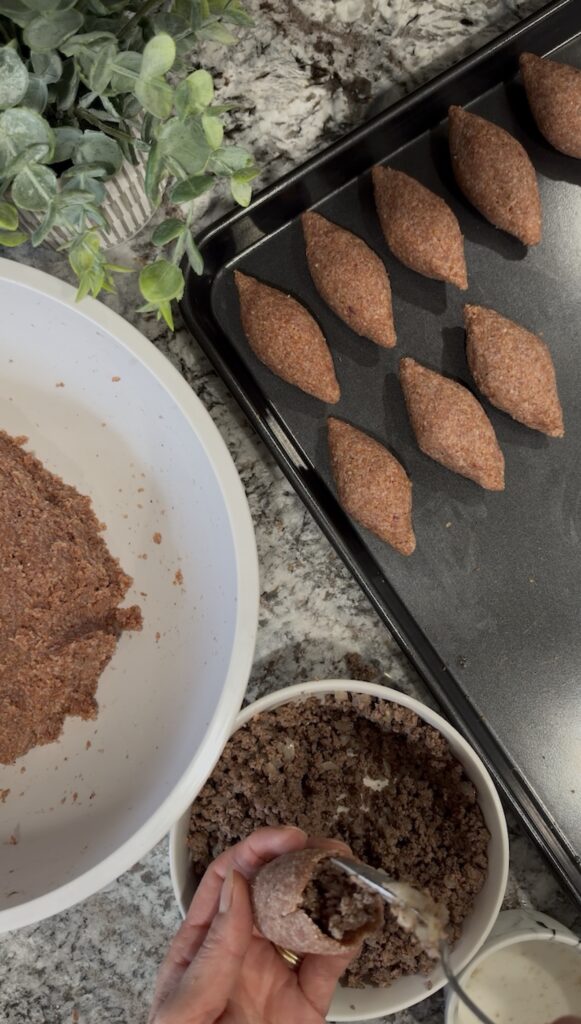
Wet your hands with cold water and take a portion of dough, rolling it into a ball.
Use your finger to make an opening in the centre, gently shaping it into a hollow shell.
Add some of the cooled meat filling, then carefully close the opening.
Shape into a traditional football-like patty, smoothing out any cracks. Repeat with the remaining dough and filling.
4. Fry the kibbeh
Heat oil in a deep pot over medium heat.
Carefully add the kibbeh in batches without overcrowding the pot.
Deep-fry until golden brown and crispy on all sides.
Remove and place on paper towels to drain excess oil. Serve warm!
Different ways to shaping Lebanese kibbeh
There are a few different ways to shape kibbeh, so don’t worry if you find the traditional method a little tricky at first! With a little practice, you’ll get the hang of it.
1. The traditional way (by hand)
The traditional Lebanese way is to shape kibbeh using your fingers. Roll a portion of dough into a ball, make an opening in the centre with your finger, and gently rotate it while thinning the sides. Add the filling, seal the opening, and shape it into a football.
2. Using a kibbeh mold
Kibbeh molds make shaping much easier, especially if you’re making a large batch. Simply follow the mold instructions to shape the shells, add the filling, and seal them. I have a video on my Instagram and TikTok showing you how to use the kibbeh mold.
3. Using a cucumber
You can also use a cucumber as a handy shaping tool! I have a video on my Instagram and TikTok showing exactly how to use this method.
4. Using a small cup and plastic wrap
Line a small cup with plastic wrap, leaving some hanging over the edges. Press a portion of kibbeh dough inside the cup, creating a hollow centre. Add the meat filling, cover with a little more dough, and use the plastic wrap to help lift it out. Gently seal and shape the kibbeh into a football.
My tip: Don’t worry about making every kibbeh perfectly identical. The most important thing is to make sure the shells are sealed well so the filling stays inside while frying.
Different ways to cook Lebanese kibbeh
The traditional way to cook Lebanese kibbeh is deep-frying, which gives it that beautiful golden-brown, crispy exterior while keeping the inside tender, moist, and flavorful. However, if you prefer other cooking methods, you have a few options!
1. Deep-fried (traditional way)
This is my favourite and the traditional Lebanese way! Deep-fry the kibbeh in preheated oil over medium heat until golden brown and crispy on all sides.
2. Air fryer
For a lighter option, you can cook kibbeh in the air fryer. Lightly brush or spray them with oil and air-fry at 375°F until golden and cooked through, turning halfway.
3. Oven-baked
You can also bake kibbeh in the oven. Arrange them on a parchment-lined baking sheet, lightly brush with oil, and bake at 400°F until golden brown and fully cooked, turning halfway through.
My recommendation: If you want that authentic Lebanese kibbeh taste and texture, I definitely recommend deep-frying. That’s how we traditionally make it in our family!
What to Serve with Lebanese Kibbeh
Lebanese kibbeh is so versatile! You can enjoy it on its own as an appetizer, or serve it in different traditional Lebanese ways. Here are some of our favourite ways to enjoy it:
On its own: Serve freshly fried kibbeh warm as an appetizer or finger food, especially with a squeeze of lemon.
soup: Kibbeh makes a delicious addition to a warm bowl of soup and is especially comforting during colder days.
hummus: Serve crispy kibbeh alongside creamy homemade hummus for a delicious combination.
yogurt: Enjoy it with a side of plain yogurt for a refreshing contrast to the crispy, seasoned meat.
Labanieh (hot yogurt sauce): One of my favourite traditional Lebanese ways to enjoy kibbeh! Labanieh is a warm, cooked yogurt sauce that pairs beautifully with kibbeh.
Kibbeh with Labanieh (Lebanese Hot Yogurt Sauce)
There are two ways to serve kibbeh with laban.
Serve on the side: Prepare the hot yogurt sauce separately and serve it in a bowl alongside freshly fried kibbeh. You can dip the kibbeh into the warm sauce as you eat.
Cook the kibbeh in the yogurt sauce: Instead of serving the kibbeh separately, gently add the shaped kibbeh to the hot yogurt sauce and let it cook in the sauce until fully cooked. This creates a delicious, comforting traditional Lebanese dish.
Both ways are delicious, and it really depends on how you grew up enjoying it!
frequently asked questions
not kneaded enough. Add a little cold water and continue kneading until it becomes soft, smooth, and easy to shape.
Can I make kibbeh without a food processor?
Of course! You can knead the dough by hand the traditional way. It takes a little more effort, but it works beautifully.
Can I use a kibbeh mold instead of shaping by hand?
Yes! Kibbeh molds make shaping much easier, especially when preparing a large batch. You can also use a small cup lined with plastic wrap.
Can I bake or air-fry kibbeh instead of deep-frying?
Yes! You can bake or air-fry kibbeh with a little oil for a lighter option. However, deep-frying is the traditional method and gives the best crispy texture.
What can I serve with Lebanese kibbeh?
Kibbeh is delicious on its own, with hummus, plain yogurt, soup, or traditional Lebanese Labanieh (hot yogurt sauce).
Can I add pine nuts to the filling?
Absolutely! Pine nuts are my favourite addition. You can also use slivered almonds or leave the nuts out completely.
Tips and Tricks
Use fine bulgur wheat: Make sure you’re using fine bulgur, not coarse bulgur, for the best texture.
Drain the bulgur well: After washing, drain any excess water so the dough doesn’t become too wet or sticky.
Knead the dough well: This is one of the most important steps! Knead until the bulgur and meat are fully combined and the dough becomes soft, smooth, and easy to shape.
Add cold water gradually: If the dough feels dry while kneading or shaping, wet your hands with a little cold water and continue working it.
Keep the dough covered: Always cover the kibbeh dough with plastic wrap or a clean kitchen towel while shaping to prevent it from drying out.
Let the filling cool completely: Never use hot filling because it can make the dough difficult to shape.
Seal the kibbeh properly: Make sure there are no cracks or openings, especially around the ends, to prevent the filling from leaking into the oil.
Wet your hands: Keep a small bowl of cold water nearby to make shaping easier and help smooth out any cracks.
Maintain the right oil temperature: Fry over medium heat. Oil that’s too hot will brown the outside before the inside is fully cooked.
Fry in batches: Avoid overcrowding the pot so the oil temperature stays consistent and the kibbeh cooks evenly.
Freeze for later: Shape the kibbeh and freeze them in a single layer before transferring to a freezer-safe bag. They’re perfect to have ready for unexpected guests or gatherings.
Add pine nuts: If you love a little crunch in your filling, toasted pine nuts are my favourite addition!

Traditional Lebanese kibbeh
Ingredients
Kibbeh dough
- 2 cups fine bulgur wheat
- 500 g extra-lean ground beef
- 1 small onion minced
- 2 tsp salt
- 2 tsp paprika
- ½ tsp black pepper
- 1 tbsp kibbeh spice or 1 tsp seven spice + 2 tsp cumin
- Cold water as needed for kneading and shaping
Kibbeh filling
- 500 g lean ground beef
- 2 tbsp olive oil
- 1 small onion chopped
- 1 tsp salt or to taste
- 1 tsp seven spice
- ½ tsp black pepper
- 2 tbsp beef tallow ghee, butter, or oil
- Pine nuts or slivered almonds optional
Instructions
- Prepare the filling: Heat olive oil in a skillet and cook the ground beef. Add the spices, then the chopped onion and cook for a few more minutes. Add the beef tallow, ghee, butter, or oil. Stir in pine nuts or almonds if desired. Set aside to cool completely.
- Prepare the dough: Wash the bulgur, drain well, and let it rest for 5 minutes.
- Blend the onion with 2 tablespoons of water until smooth.
- Add the onion mixture and spices to the bulgur and mix well.
- Add the extra-lean ground beef and knead until the dough is soft and smooth. Add a little cold water as needed.
- Shape the kibbeh: Take a portion of dough, make an opening in the centre, and gently shape into a hollow shell. Add the cooled filling, seal, and shape into a football.
- Fry: Heat oil in a deep pot over medium heat. Fry the kibbeh in batches until golden brown and crispy.
- Remove and place on paper towels to drain excess oil. Serve warm!
Notes
k